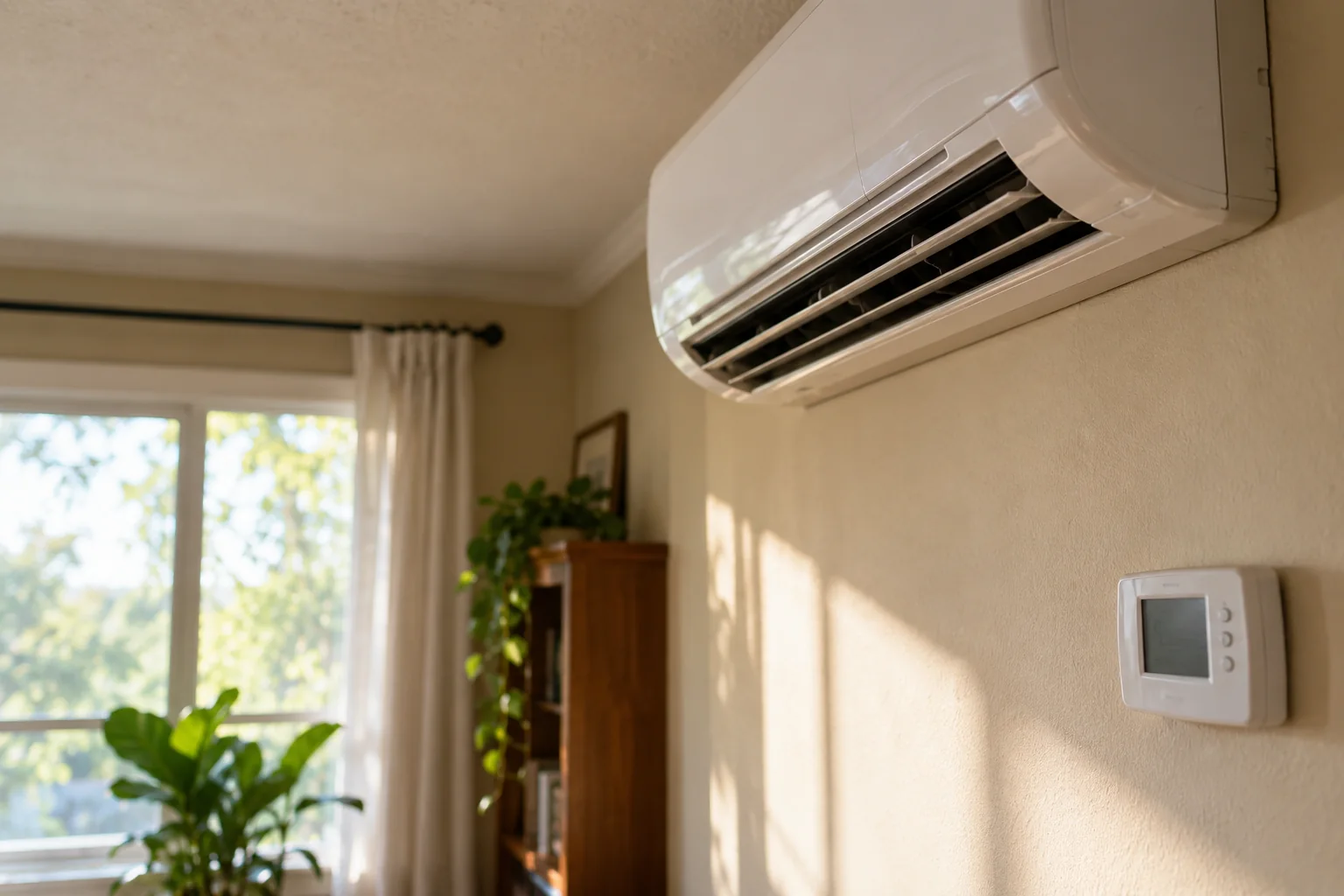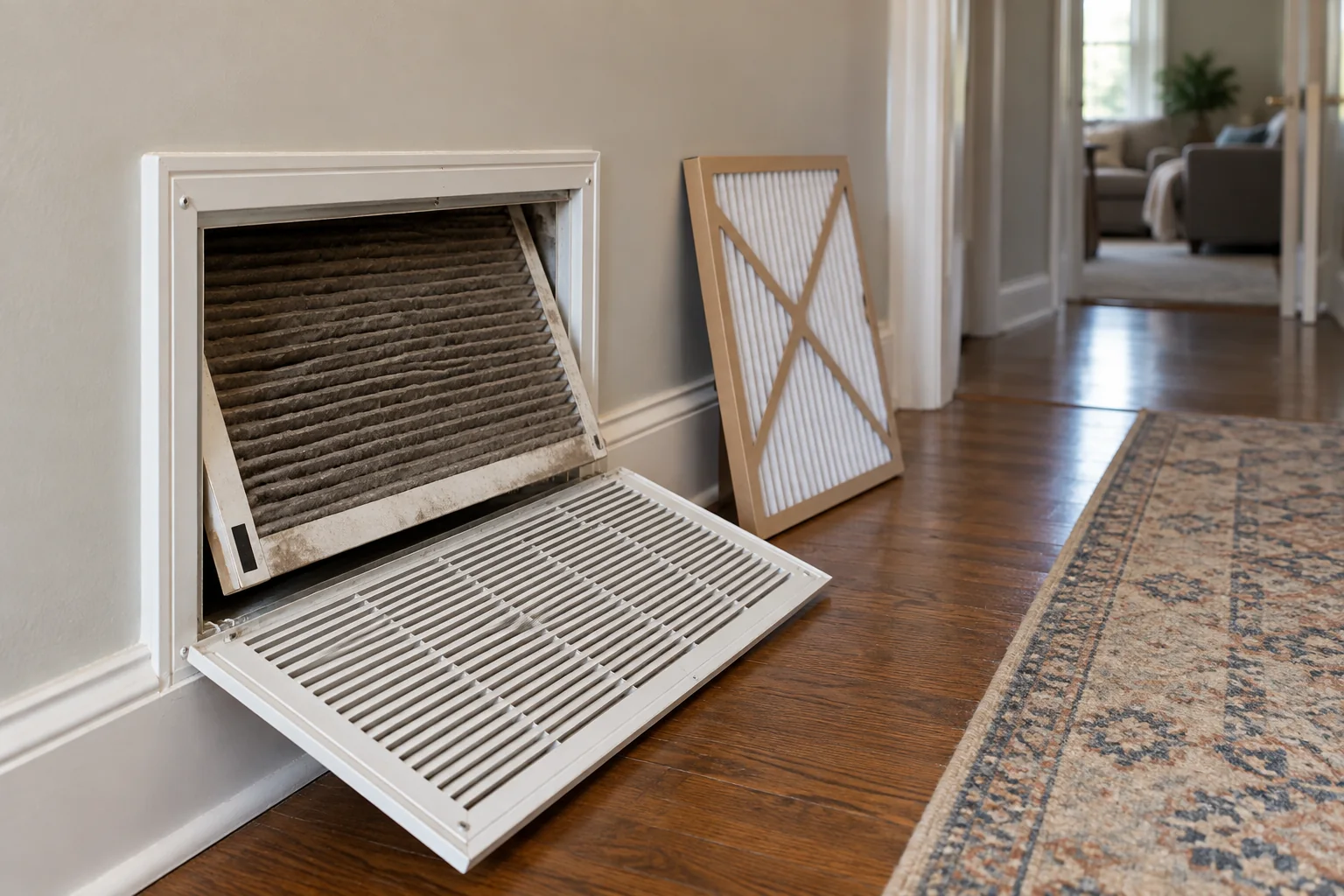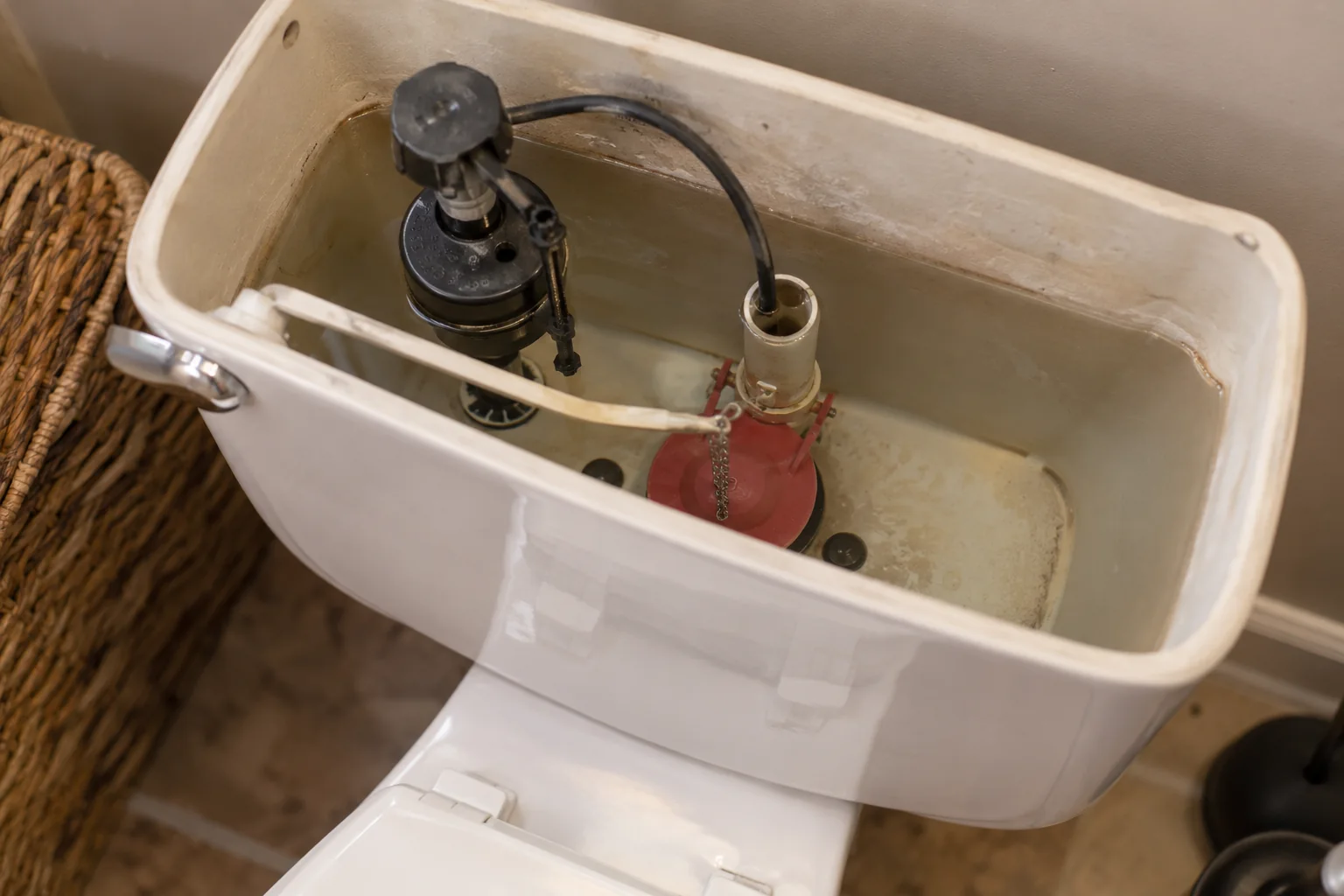
Use spring and autumn as inspection reminders, then adjust for nearby trees, local weather, and visible blockages. Some homes need more frequent attention.
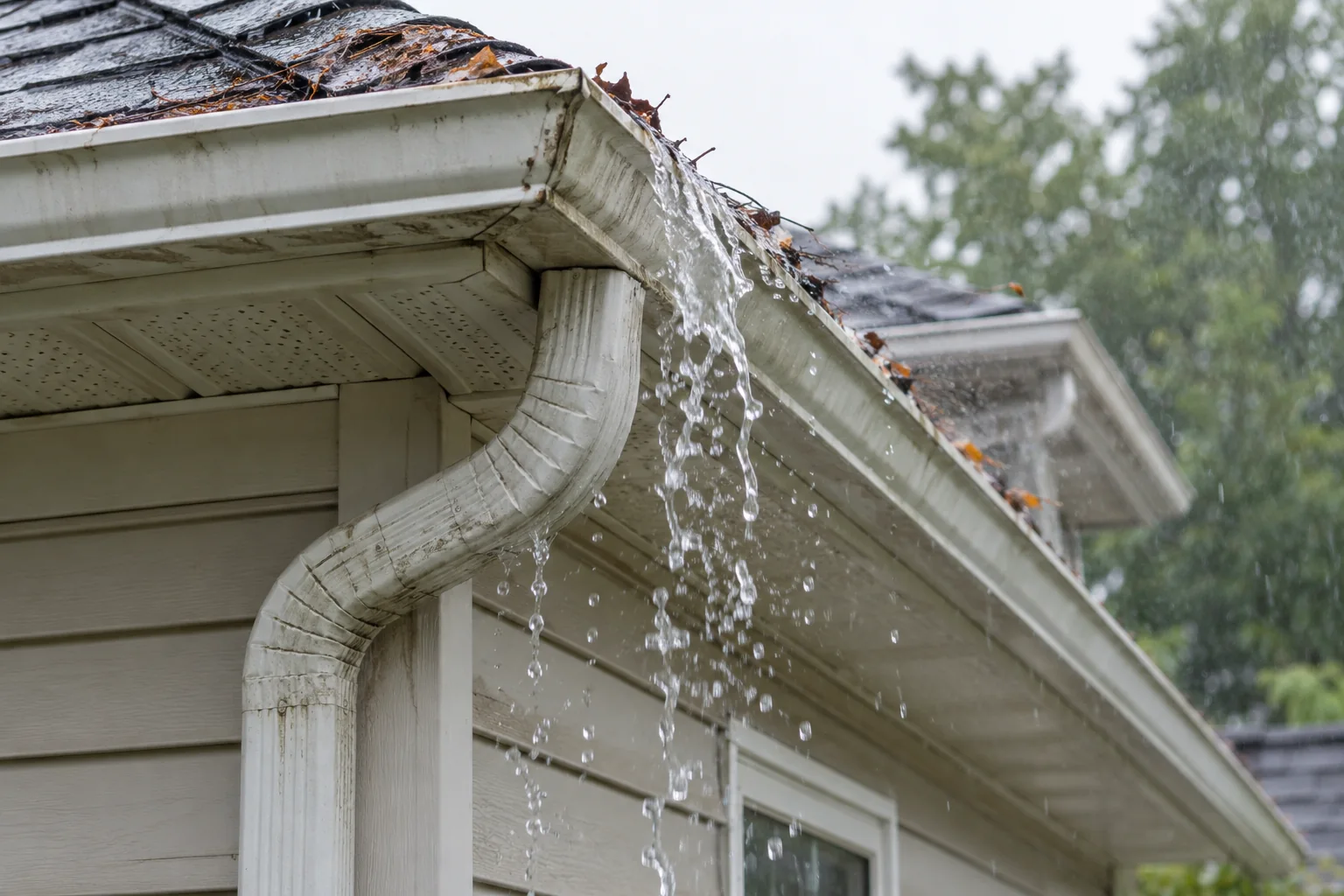
A calendar cannot tell you when a branch has blocked a downspout. The practical goal is to keep rainwater moving to its intended outlet. Watch the system from the ground during rain when it is safe, and look for overflow or water tracking down walls.
Plan the next check
- 01Read the warning signs from ground level
- 02Adjust the schedule to the property
- 03Choose a safe cleaning method
- 04Check the result
Read the warning signs from ground level
Look for plants growing in gutters, sagging sections, overflowing corners, or splash marks beneath an outlet. Water spilling over one section may mean a blockage, but damaged joints or poor alignment can look similar.
Walk around after a storm and note where debris collects. Photograph the problem from the ground so a cleaning service can see which area needs attention.
Use observations you can make from the ground
You do not need to climb to notice many gutter problems. During rain, watch from a safe position for water spilling over an edge, shooting past a downspout, or collecting beside the foundation. On a dry day, look for vegetation growing from the channel, staining below a joint, a detached bracket, or a downspout that no longer points away from the building. Binoculars can help from ground level. Do not stand beneath an unstable gutter, lean out of an upper window, or step onto a roof to improve your view.
A splash near the house does not always mean the entire run is packed with leaves. Water may be overtopping one low point, escaping a leaky joint, or meeting a blocked downspout. Note the exact location and whether it appears in light rain or only during a heavy storm. Video from a safe covered position can help a contractor understand an intermittent problem. If water is entering the building or eroding the ground beside it, arrange prompt assessment rather than waiting for the next seasonal cleaning date.
Distinguish debris from drainage defects
Gutters must move water toward an outlet, and downspouts must carry it to an appropriate discharge point. Cleaning will not fix a run that is sagging, pitched the wrong way, or separated at a joint. Look for sections that hold visible water long after rain, fasteners pulling away from fascia, and wet patches that persist after the channel has been cleared. A professional can assess both debris and the condition of the system. Ask for photographs of inaccessible areas so you can see why a repair is proposed.
Consider where the water goes at the bottom. A clear downspout that dumps against the foundation may still cause trouble. A splash block or approved extension may be appropriate, but the solution depends on grading, walkways, and local drainage arrangements. Do not direct water onto a neighbor's property or block a pedestrian route with a loose extension. The goal is a continuous, safe path for water away from the building.
Adjust the schedule to the property
Homes close to deciduous trees may collect heavy leaf fall in autumn. Pine needles, seed pods, and roof debris can arrive at other times. Check after major storms and after nearby tree work.
Gutter guards can reduce some debris but do not make the system maintenance-free. Follow the guard manufacturer's inspection and cleaning instructions and keep outlets under review.
Build an inspection rhythm for your surroundings
There is no universal calendar that fits every roof. A house under shedding trees may need checks during or after leaf drop, while a property with little overhead vegetation may need fewer debris cleanouts. Nearby pine needles, seed pods, moss, and windblown litter behave differently. Note when the first overflow appears and what you see from the ground after storms. This local history is a better guide than copying another household's schedule.
At minimum, include a ground-level check before the wettest part of your local year and after major wind or leaf fall. If you have a professional cleaning service, ask them to report how much material they removed and from where. If the channel was nearly empty several visits in a row, discuss whether the schedule should change. If it was repeatedly packed soon after service, ask whether nearby vegetation, a roof condition, or the gutter design is contributing. The schedule should respond to evidence, not become an automatic purchase.
Notice the house, not only the gutter
Exterior paint streaks, stained fascia, splashes on siding, basement dampness, and soft ground at one corner can be linked to drainage, though they do not prove the gutter is the sole cause. Photograph a change and note the weather. Inside the home, a new ceiling stain or damp wall warrants prompt assessment; do not wait for a gutter visit to rule out roof or flashing problems. A cleaning appointment can be combined with a careful inspection, but it cannot certify the entire roof drainage system.
Gutter guards may reduce some kinds of debris but are not a no-maintenance guarantee. Material can collect on top, enter at gaps, or block outlets. Ask how a guard will be inspected and cleaned before installing it. A system that hides the channel completely can make verification harder. Your objective is easier maintenance and reliable drainage, not simply fewer visible leaves.
Choose a safe cleaning method
For high roofs, awkward access, unstable ground, or any uncertainty, hire an insured gutter service. Ground-operated tools are useful only when suited to the building and used away from overhead electrical lines.
Ask the service to inspect downspout discharge as well as removing gutter debris. Clear gutters are not enough if the outlet sends water toward the foundation or a blocked drain.
Choose a method that respects height risk
Working on ladders or roofs carries a risk disproportionate to the apparent simplicity of scooping leaves. This guide deliberately stops at ground-level observation. If cleaning requires elevation, hire someone with suitable equipment and insurance for the property. Describe access challenges, overhead wires, fragile landscaping, and where water can be discharged. Do not ask a household member to balance on a chair, lean from a window, or work from a roof edge.
A ground-based tool may be usable on some low runs, but it can also scatter debris, damage a loose gutter, or leave a downspout blocked. Follow the tool maker's limits and work from stable ground. Wear eye protection if debris may fall, keep bystanders away, and stop if you cannot see or control what the tool is doing. A clean-looking section is not proof that water can pass through the outlet. Verification should include the whole route when safe and appropriate.
Ask for a useful scope of work
When booking a professional, clarify whether the price includes removing debris, checking outlets and downspouts, carrying waste away, and reporting defects. A service that merely blows leaves off the roof may leave channel material or a blocked downspout. Ask how they will protect landscaping and avoid pushing debris into drains. If a repair is identified, request photos and a separate explanation before authorizing additional work. This helps distinguish routine cleaning from replacement of brackets, sealant, or sections.
If the building is a rental, shared property, or part of an association, confirm who is responsible before commissioning work. Access to common roof areas and drainage systems may be restricted. Report leaks promptly even when you cannot authorize the repair yourself. Clear records of where and when overflow occurred make that report more useful.
Check the result
During the next rain, observe from a safe sheltered position. If overflow persists, report the location and ask about slope, joints, outlet capacity, or the downstream drain. Do not assume repeated cleaning fixes a damaged system.
Verify drainage rather than appearance alone
After cleaning or repair, look for the next safe opportunity to observe water movement. During a normal rain, does it run toward the downspout without pouring over the edge? Is there a new splash at a joint or outlet? Where does the downspout discharge? Stay away from lightning, slippery ground, and falling debris. If you do not want to wait for rain, ask the contractor whether they can demonstrate flow using a controlled method suited to the building. Do not flood an unknown drainage system simply to test it yourself.
A persistent overflow in one location can mean the channel is still blocked, the slope is wrong, the outlet is too small for the flow, or another roof detail is sending extra water there. Describe the remaining symptom instead of ordering another identical cleaning. Likewise, a stain on the exterior may remain after the leak is fixed; compare fresh moisture and new marks rather than judging an old stain alone. The test is whether the next rain moves away from the building as intended.
Keep a short maintenance record
Save the service date, observations, photographs, and any repaired sections. Mark the season when most debris arrives. If you notice a wet basement corner or puddle by the foundation, include that in the record and seek the right specialist if it persists. Over a year or two, these notes reveal whether the cleaning interval is too long or whether a design defect keeps recurring. They also help a new contractor understand the property without guessing.
Treat gutter care as part of water management, not a cosmetic chore. The safest homeowner role is to watch, document, and arrange appropriate service before overflow causes damage. A professional can clean and inspect inaccessible components, but the owner still needs to notice how the system performs between visits. A schedule grounded in the actual property makes that possible without unnecessary or risky work at height.
Turn one inspection into a useful routine
A maintenance schedule improves when it records observations, not just dates. Keep a brief note of what you inspected, what you saw, and whether action was needed. Over several cycles, this tells you whether the interval is sensible for your property. A change in season, occupancy, weather exposure, or equipment use can make an old routine too frequent or too slow. Review the schedule when those conditions change instead of treating a printed interval as a guarantee.
Take photos from the same safe position when possible. They make subtle changes easier to recognize and are useful when you ask a contractor for advice. Do not use a photo as a substitute for an inspection where the problem can be hidden. If moisture, noise, or other warning signs appear between scheduled checks, respond then. A calendar is a reminder to look, not permission to ignore an active fault until the next date.
Know what successful maintenance looks like
After a cleaning, replacement, or service visit, check the function that originally mattered. Does water move away, air flow as expected, or the equipment complete a normal cycle? Ask the service provider what they found and whether they recommend any change to the next inspection date. Keep product specifications and invoices so future work starts with accurate information.
If a maintenance task repeatedly produces the same abnormal finding, look for an underlying cause. Replacing a component sooner every cycle may be a symptom-management strategy rather than a solution. At that point, a qualified assessment can be more useful than increasing the frequency again. A good routine leaves the home working reliably and gives you clear signals for when to seek help.
Quick recap
- Read the warning signs from ground level.
- Adjust the schedule to the property.
- Choose a safe cleaning method.
- Check the result.
Frequently asked questions
Do gutter guards remove the need for cleaning?
No. Debris can collect on top of guards or around outlets, so inspection still matters.
Can I wait if only one corner overflows?
Investigate promptly. Concentrated overflow can repeatedly wet the same wall or ground area.