Clear the busiest sightlines, reduce unnecessary visual contrast, improve lighting, and store daily items where they do not crowd the sink or floor.
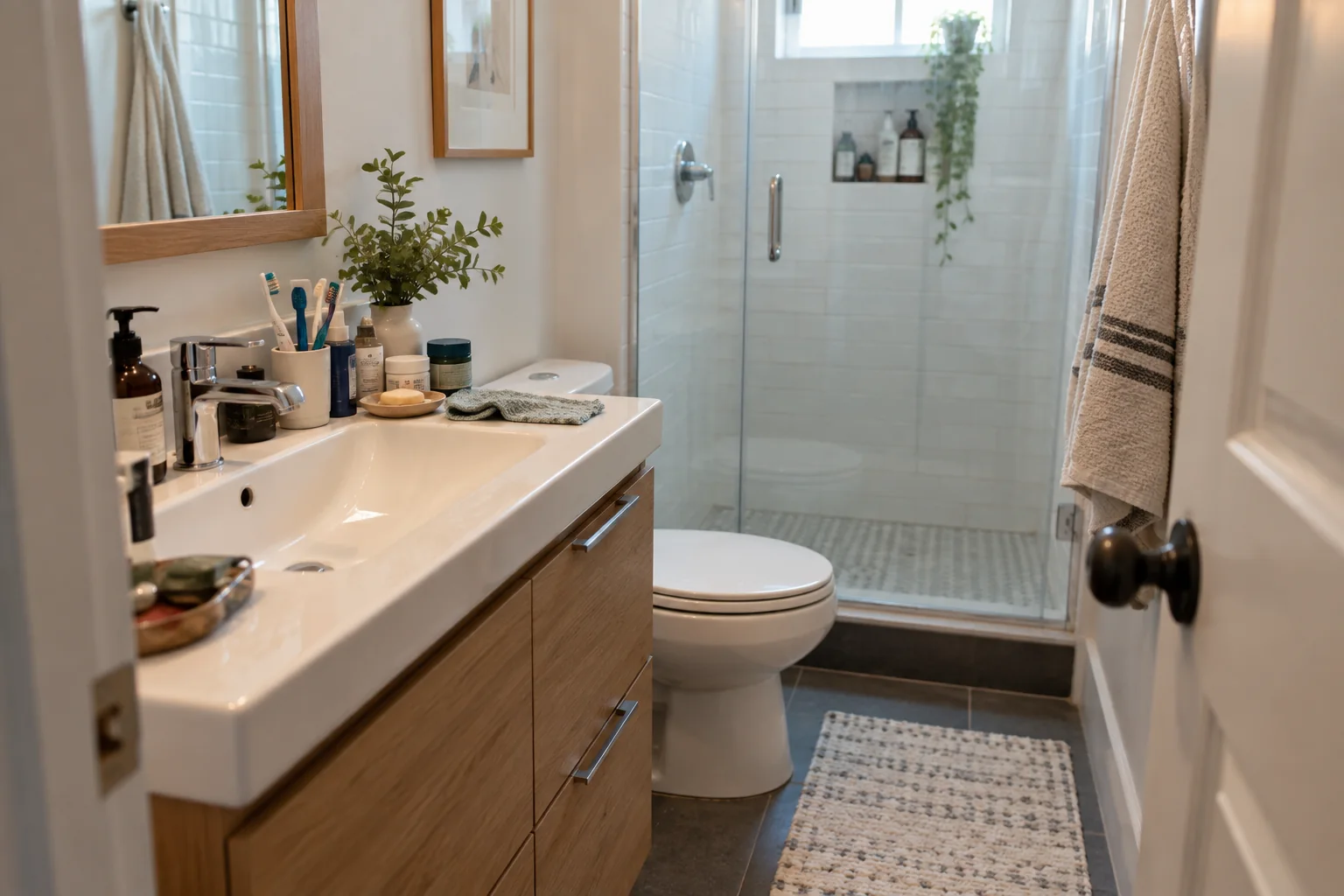
A small bathroom does not need a major renovation to feel easier to use. Start by noticing what interrupts the view from the doorway. A crowded counter, dark shower curtain, or several competing finishes can make a compact room feel more confined.
Begin with the most useful changes
Keep only frequently used items on the counter and move backups elsewhere. Use storage that fits the available depth so it does not intrude into the walking route.
Clean the mirror and existing light diffusers first. Consider whether shadows around the face come from the position of the light rather than the room's color.
Edit the everyday surfaces
Keep only frequently used items on the counter and move backups elsewhere. Use storage that fits the available depth so it does not intrude into the walking route.
Group small items in one washable tray. This makes cleaning easier and helps the surface read as one organized area instead of many separate objects.
Observe what makes the bathroom feel crowded
A small bathroom can feel tight because of visible clutter, dark corners, bulky storage, a door that swings into the route, or several competing finishes. Stand at the entrance and note what your eye meets first. Then use the room normally: where do towels land, where do toiletries gather, and which cabinet door is awkward to open? Photograph the counter and floor before changing anything. A visual enlargement that makes daily storage less convenient will not improve the room.
Remove only what clearly does not belong or is no longer used. Keep essential items within reach, especially medicines and toiletries that require appropriate storage conditions. A clear counter can make the room appear calmer, but do not solve it by stacking everything inside a damp cabinet. Measure available shelves and consider a shallow tray or drawer divider that keeps categories accessible. The goal is fewer visible interruptions and less time searching.
Protect the movement path
Check clearance around the toilet, vanity, shower door, and main door. A narrow freestanding shelf may fit on a plan yet block the person using the space. Tape the footprint of a proposed item on the floor before buying it. Open every door and drawer with the tape in place. If accessibility is important, prioritize safe reach and movement over a decorative mirror or stool. Any proposed change to plumbing fixtures or door swing may require professional design and local code review.
A small room often benefits from the removal of one oversized item more than from several new organizers. Try the reversible change first.
Make finishes work together
Use a restrained palette across towels, accessories, and storage. Similar tones can reduce visual breaks, but they do not all need to match exactly.
If replacing a shower curtain, consider a lighter or less busy design while maintaining privacy. Avoid buying a glass enclosure only for appearance without considering cleaning access, ventilation, and installation requirements.
Keep the finish palette controlled
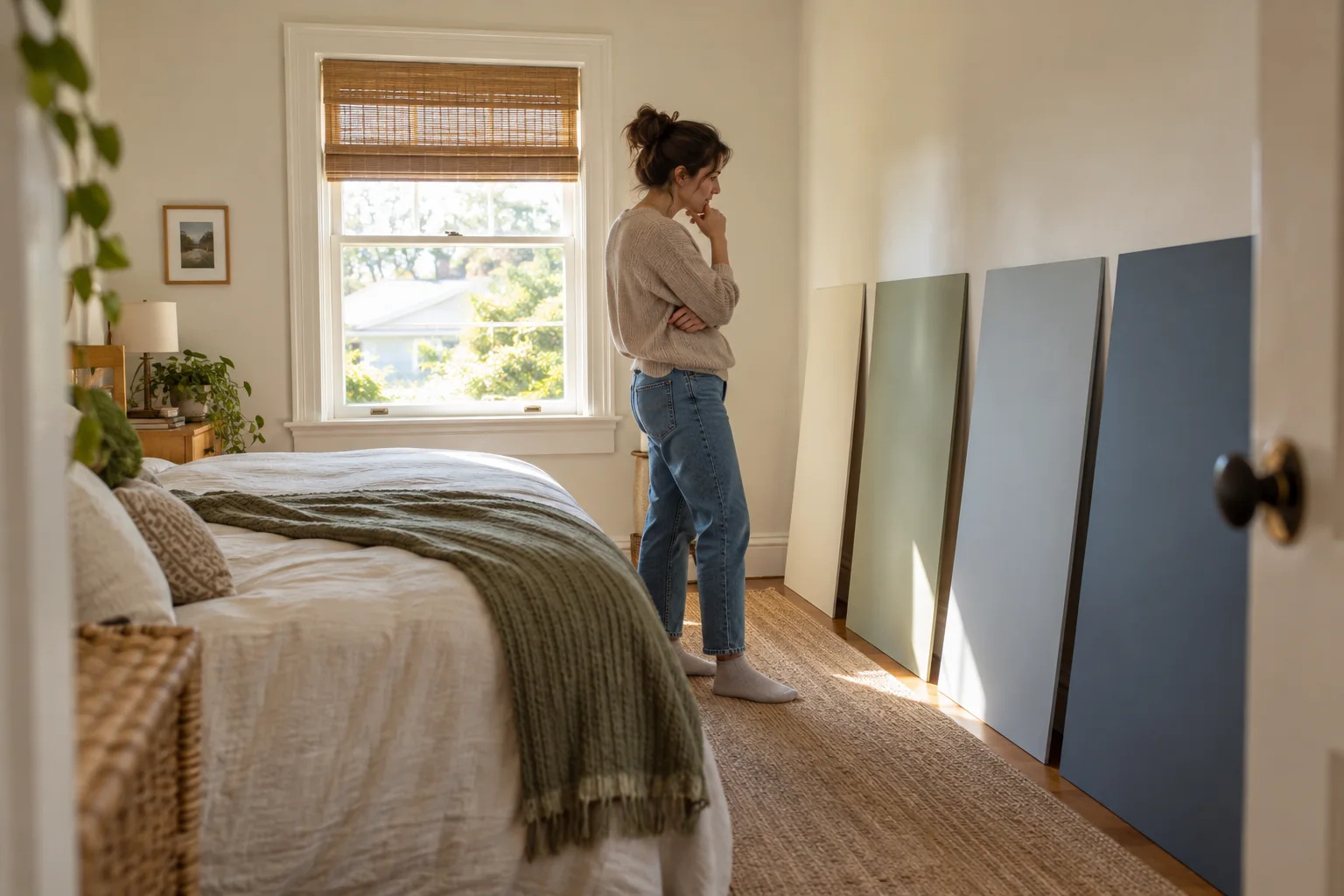
Too many strong changes of color and pattern can break the room into small visual pieces. Choose a limited relationship among wall, tile, grout, vanity, and floor. That does not require everything to be white. A consistent mid-tone can feel calm, while a lighter wall may brighten a room with little daylight. Bring samples into the bathroom and view them under its actual lighting. Glossy surfaces can reflect light but also glare and show water spots. Matte surfaces may feel softer but have their own cleaning needs.
The size and placement of a pattern matter. A large pattern on one surface can be a useful focal point; several small busy patterns can compete. If the existing tile is staying, let it guide the new paint or accessories. Do not paint over damp or failing material simply to unify the color. Repair leaks and damaged joints first.
Use storage that disappears into routines
A medicine cabinet or shallow wall shelf may provide storage without occupying floor space, but mounting depends on the wall and hidden services. Do not drill into tile or a wall that may conceal plumbing without assessment. A narrow cabinet can work if doors still open and it does not crowd the sink. Open storage looks airy when lightly used but can become visually busy when every bottle is on display. Test with the items the household actually needs.
Use hooks where towels can dry, not just where they look balanced in a photo. Moist towels piled in a tight room can create odors and moisture. If a hook is placed near a shower, check that it does not catch the door or curtain.
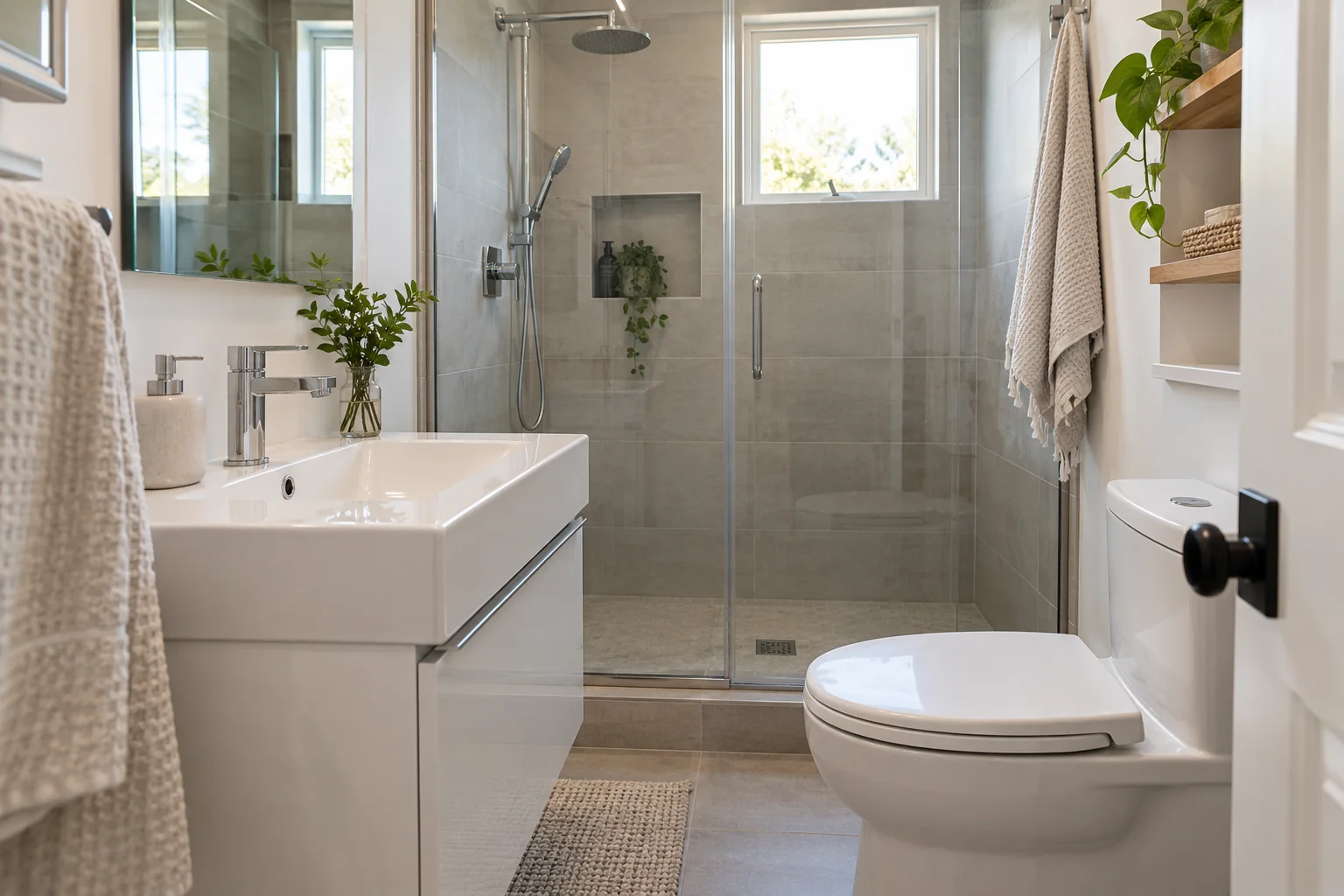
Use light and mirrors thoughtfully
Clean the mirror and existing light diffusers first. Consider whether shadows around the face come from the position of the light rather than the room's color.
A larger mirror may open the view, but it needs suitable mounting and clearance. Electrical changes in wet areas require appropriately qualified installation and locally compliant fixtures.
Layer light for the tasks
A brighter ceiling lamp alone may produce shadows at the mirror. Lighting at or beside the mirror can help with grooming, while softer general light makes the room comfortable. Check fixture ratings for wet locations and ask a qualified electrician for any wiring change. Do not put a portable lamp or extension cord beside a sink or shower. A mirror can reflect available light and expand sight lines, but its effect depends on what it reflects. Position it to catch a light source or a calm wall rather than a cluttered shelf.
Choose bulbs compatible with the fixture. Color appearance can change paint and tile dramatically, so test under the light you plan to keep. If the bathroom has a window, consider a privacy treatment that admits daylight while meeting the household's needs. Keep window operation and ventilation intact.
Balance mirrors and surfaces
A larger mirror can make a narrow bathroom feel more open, but it should be scaled to the vanity and mounted securely. Check wall construction and product weight before installation. A mirror reaching close to a sink may collect splashes and require frequent cleaning. A highly reflective cabinet front can add depth but may also reveal clutter on opposite walls. View a proposed mirror position at standing and seated heights if the room serves different users.
Avoid removing a usable cabinet merely to achieve an “open” look unless you have a realistic place for its contents. Visual space and functional space must both improve.
Protect usability
Keep doors, drawers, and access panels operable. Wall-mounted storage should use fixings suitable for the wall and avoid hidden services. Renters should use approved reversible options.
Do not sacrifice ventilation, safe movement, or easy cleaning for a visual trick. A room feels better when everyday tasks are simpler.
Keep water management central
A bathroom is a wet room. A new paint color or accessory does not correct failed caulk, an overflowing shower, or a fan that does not vent properly. Inspect joints, condensation patterns, and the floor after bathing. If there is a persistent damp smell or softened wall, repair that before any cosmetic update. Follow product instructions for moisture-resistant finishes; “bathroom paint” is not a substitute for ventilation or waterproofing behind tile.
Choose accessories that can be removed for cleaning. A floor basket that traps water or a shelf that hides a leak may make maintenance harder. Keep the path to shutoff valves and access panels clear. A small room benefits when every item has a reason to be there.
Test changes one layer at a time
Start with a clutter edit and better placement of towels and toiletries. Then consider lighting, paint, mirror, or storage. Use the room for several days between meaningful changes. If the room already feels easier to use, a larger renovation may not be necessary. If the bottleneck is fixture position, seek professional design advice rather than buying more small accessories.
Photograph the room from the same doorway after each stage. Compare not only the visual impression but whether doors open, surfaces dry, and people can move comfortably. The best small-bathroom improvement creates calm without sacrificing safety, privacy, or maintenance access. It should work on a rushed morning and after a shower, not only when every counter is empty.
A small bathroom often has one fixed feature that deserves to remain visually quiet. If the floor tile is busy, let the wall and textiles be calmer. If a vanity has a strong color, repeat that tone lightly in a towel or accessory rather than adding several unrelated accents. This is not a rule that every surface must match; it is a way to reduce the number of visual stops. Test the effect by removing accessories for a day and returning only the pieces you actually use. The change costs nothing and may show that new paint is less urgent than better storage. Before mounting a shelf, tape its outline to the wall and stand at the sink. Check head clearance, drawer travel, and reach. The room should feel easier both when empty and when someone is using it. Photographs taken from the doorway and from the shower exit can reveal different pinch points that a floor plan misses.
Review the room in use
A room makeover should make ordinary routines easier. Spend a day noticing where items accumulate, where people bump into each other, and which surface is hard to reach or clean. Record one or two friction points before choosing finishes. After the first change, use the room normally for a few days. A clearer counter or brighter corner may help more than a dramatic new item that consumes floor space. Keep the changes that improve movement and access, not merely the photograph.
Measure before buying furniture, storage, or mirrors. Leave enough clearance for doors, drawers, and people to move. Check the installation requirements for anything mounted on a wall, including the wall type and hidden services. A lightweight decorative change and a heavy wall cabinet are different projects. If the room has water or electrical risks, stop at planning and use qualified help for the technical work.
Build a layered result
Most rooms benefit from several modest choices working together: light, storage, surface color, and a clear path through the space. Evaluate each layer against the same goal. If a new lamp creates glare, adjust its position rather than adding another. If storage makes the room feel crowded, remove or relocate items before buying more containers. Small revisions are part of the process, not evidence that the first plan failed.
Keep product details and paint colors in a home note. Photograph the room in its usual light after each meaningful change. That record helps you decide whether the next purchase is necessary. A successful makeover is not the most elaborate one; it is a room that feels more comfortable and functions better on an ordinary day.
Frequently asked questions
Does a bigger mirror always help?
It can improve the sense of space, but placement, mounting, lighting, and what it reflects all matter.
Should everything be white?
No. A consistent palette and useful lighting are often more helpful than a single prescribed color.