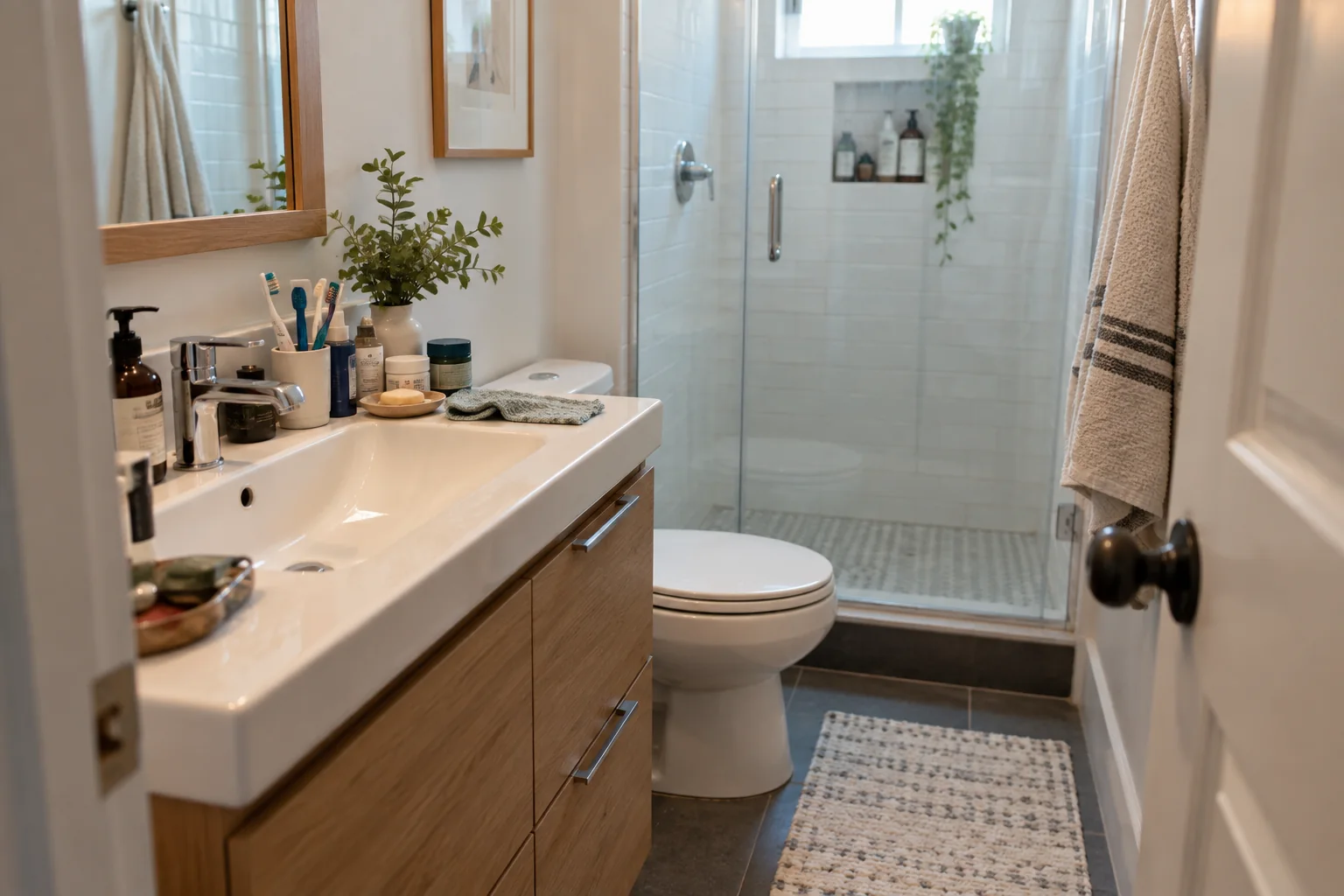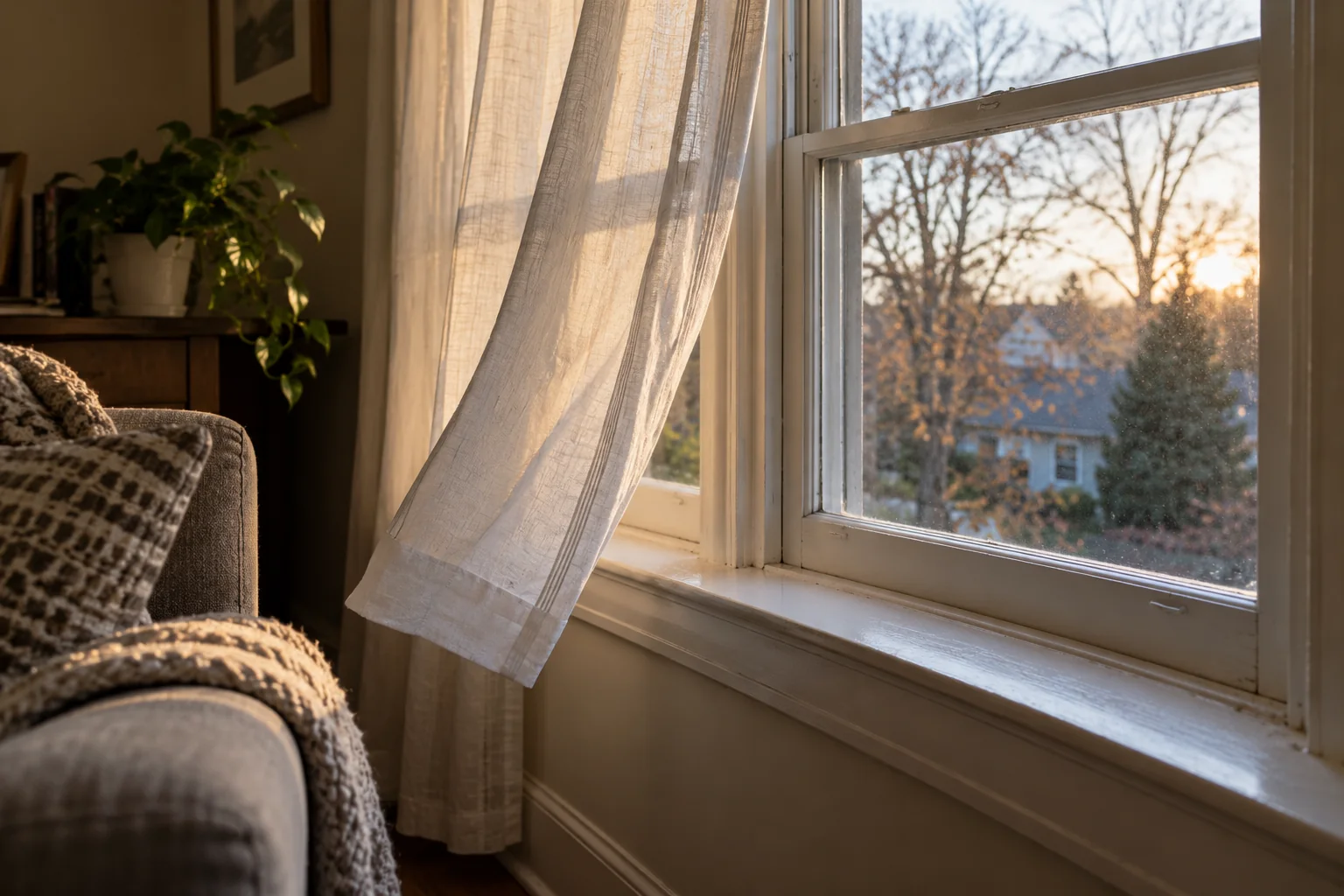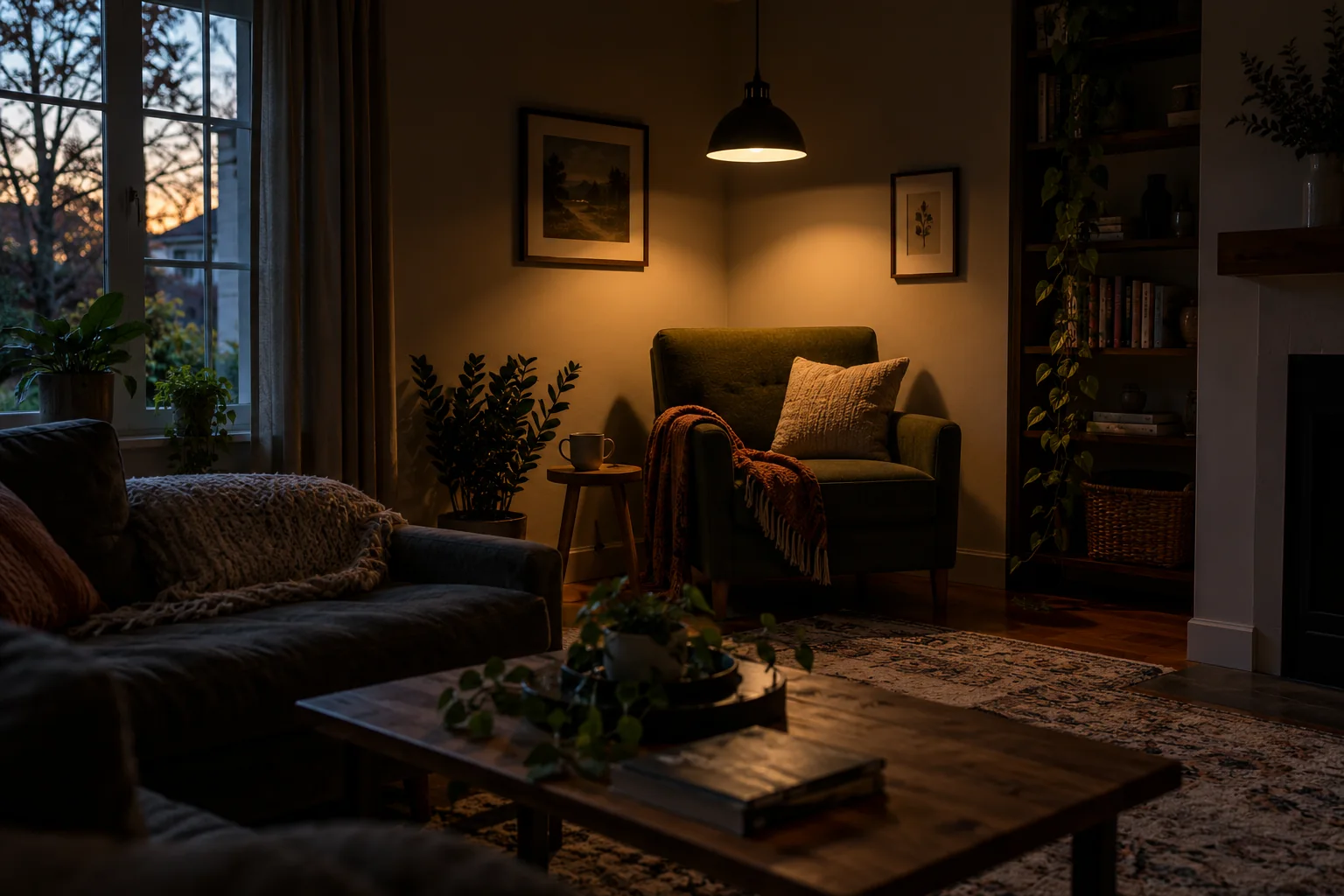
Add light where tasks happen, soften dark corners with suitable lamps, and choose compatible bulbs by light output rather than wattage alone.
One bright ceiling light can leave a room feeling uneven. The problem may be contrast: a bright center with dark walls and corners. A layered approach lets you light reading, cooking, or relaxing without making every surface equally bright.
Begin with the most useful changes
List the activities and the spots where people sit or work. Check daytime obstructions such as heavy curtains or furniture blocking a window. Clean accessible shades and diffusers with the power off and according to their instructions.
Compare lumens for light output and select a color temperature that suits the room. Keep the appearance reasonably consistent between lamps that are used together.
Observe how the room is used
List the activities and the spots where people sit or work. Check daytime obstructions such as heavy curtains or furniture blocking a window. Clean accessible shades and diffusers with the power off and according to their instructions.
Notice where glare appears on screens or glossy surfaces. More light from the same direction may worsen that problem rather than solve it.
Observe the room by activity
A room can be dark in several ways. The overall light level may be low, a work surface may be in shadow, or bright lamps may create glare while corners still feel dim. Spend one evening doing the tasks that happen there: reading, cooking, working, watching a screen, or moving through the room. Note where the light comes from and which surface is hard to see. A single brighter ceiling bulb may not solve a shadow cast by your own body at a desk.
Check daytime conditions separately. A heavy curtain, furniture blocking a window, or a dark shade may limit useful daylight. You can test a reversible change by opening the treatment fully or moving an item temporarily. Do not compromise privacy or thermal comfort without considering the tradeoff. Light-colored surfaces may reflect more light, but they cannot create daylight where the window is blocked. Start by identifying the cause of darkness.
Sketch the light sources
Mark the ceiling fixture, windows, existing lamps, and the places people sit or work. Note where cords could cross a walkway. A floor lamp in a narrow passage may brighten a corner but create a trip hazard. A table lamp may be safer on a stable surface, provided its cord and heat clearance meet the manufacturer's instructions. The useful arrangement often includes more than one source at different heights. This reduces harsh contrast between one bright spot and the rest of the room.
If a fixture flickers, overheats, smells burnt, or has a damaged cord, stop using it. Do not treat a wiring problem as a bulb-shopping task.
Add task lighting first
Place an appropriate reading or desk lamp so it lights the work without shining directly into the eyes. Keep cords away from walkways and do not hide them under rugs.
Use fixtures designed for the location. A dry-room table lamp does not become suitable for a wet area because it is placed carefully.
Put light where the work happens
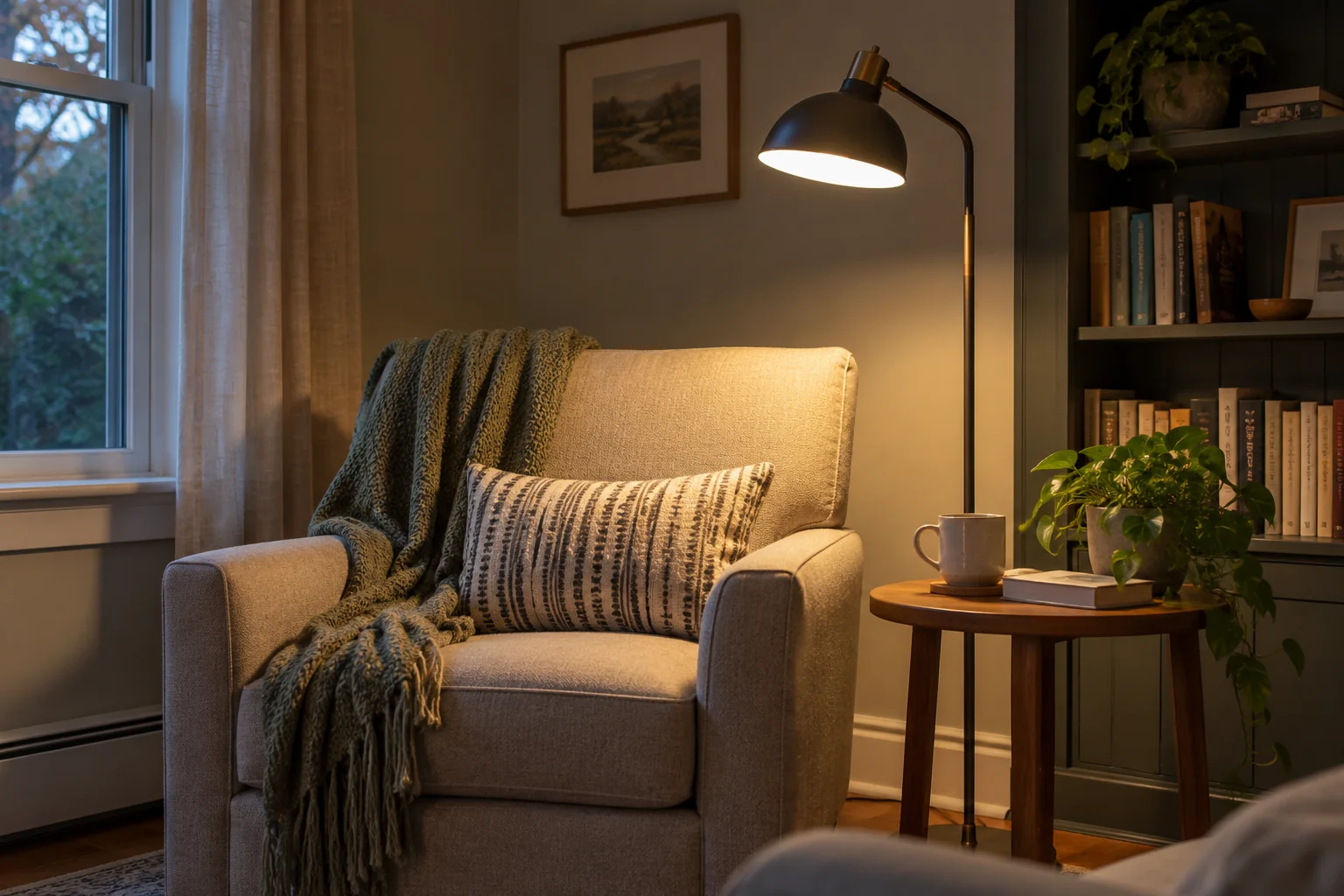
Task lighting is often the fastest improvement. A reading chair needs light on the page without shining into the reader's eyes. A desk needs light on the work surface without reflecting into a screen. A kitchen counter may need under-cabinet lighting, but wired installation belongs to a qualified professional. Try a suitable plug-in lamp in a safe location first if that gives you the information you need. Move it a few inches and observe how the shadow changes.
Choose a lamp with an adjustable shade or direction when the task varies. Check that the surface can support it and that the cord will not be pinched by furniture. A lamp near curtains, bedding, or other fabrics needs the clearances stated by its maker. Do not use a higher-wattage bulb than the fixture permits. LED packaging may describe equivalent brightness, but the fixture's electrical rating still applies.
Balance task and ambient light
A focused lamp can make reading comfortable while the rest of the room remains inviting. Add a softer ambient source so your eyes are not switching constantly between a bright page and a black background. Wall washing or a lamp aimed at a light-colored wall can make the space feel more open without a harsh exposed bulb. Test the arrangement at night with the curtains as they are normally used. If glare appears on a screen or shiny table, change the angle before buying another fixture.
Dimmers can help, but compatibility among the dimmer, bulb, and fixture matters. If a change requires wiring, have a qualified person evaluate it. Plug-in controls should also follow their ratings and instructions.
Choose compatible bulbs
Compare lumens for light output and select a color temperature that suits the room. Keep the appearance reasonably consistent between lamps that are used together.
Check the fixture's maximum rating, enclosure requirements, and dimmer compatibility. Do not fit a bulb that exceeds the rating or assume every LED works with every dimmer.
Read the bulb and fixture labels together
Brightness, color appearance, beam spread, and compatibility all affect the result. Compare lumens rather than relying on old incandescent wattage habits. A narrow beam can be useful over a task area but leave the rest of the room dim. A warm color may feel relaxing in a living room, while a different appearance can help certain work; test under actual finishes. The same bulb can look different behind an opaque shade or clear globe.
Check the fixture's maximum rating, socket type, enclosed-fixture restrictions, dimmer compatibility, and any wet-location requirement. An LED that fits physically may still be unsuitable for a sealed fitting. Do not stack adapters or use a loose socket. If a bulb repeatedly fails or flickers, have the fixture assessed instead of trying progressively stronger products.
Test changes before replacing everything
Buy one or two candidate bulbs and use them in the existing lamps. Observe the room for a few evenings. Does the reading surface improve? Is there less glare? Does the color make paint and furniture look natural? Keep notes on the bulb model so you can repeat a successful choice. A photograph may show distribution but can exaggerate brightness because phones adjust exposure automatically. Trust the lived experience and the product labels.
If the room still feels dark, consider whether furniture placement or window treatment is blocking useful light. A lighting purchase is only one possible lever.
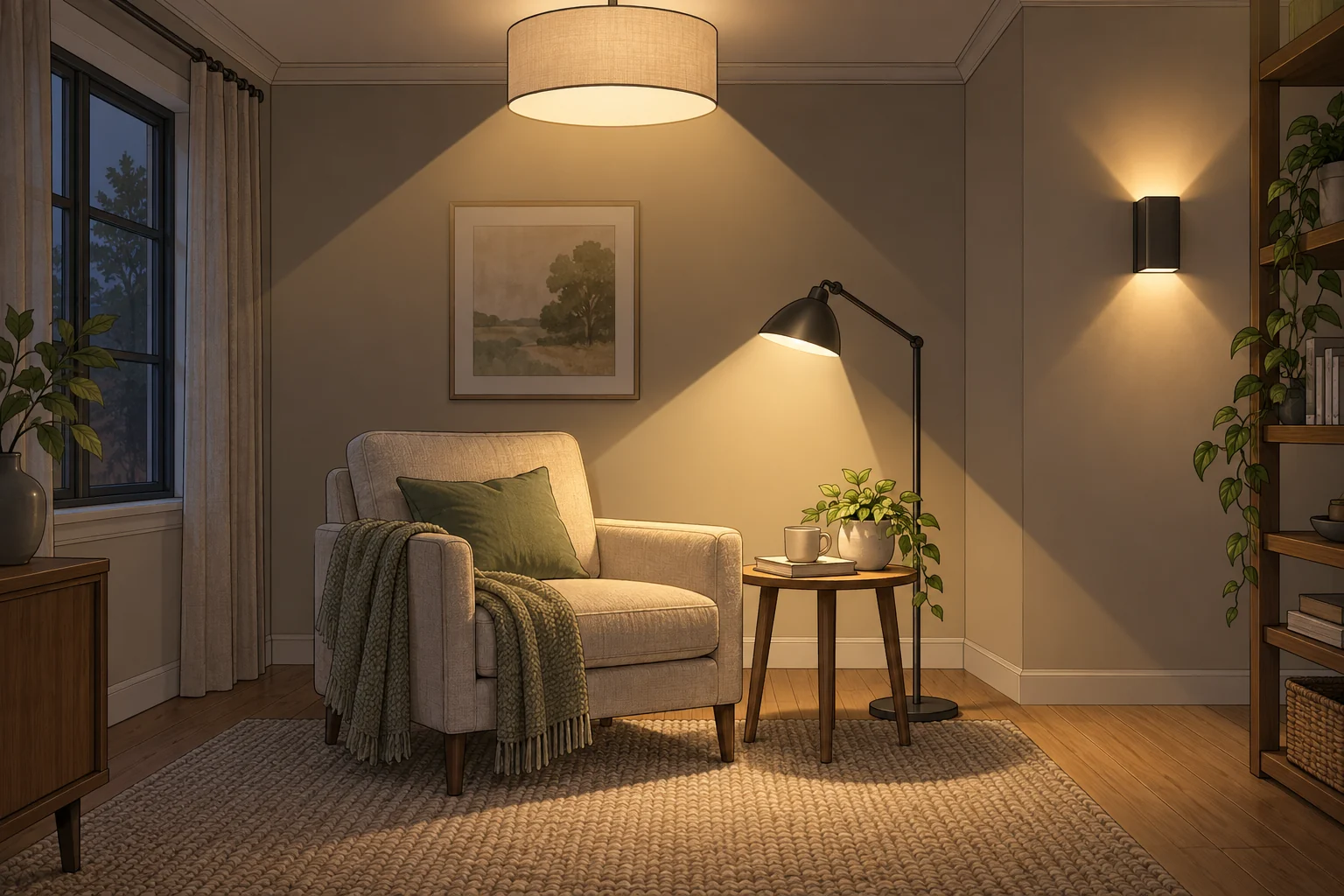
Balance the room
A lamp illuminating a wall or darker corner can reduce harsh contrast. Light-colored surfaces may reflect more of the available light, but changing paint does not replace a needed task light.
Try movable lamps before commissioning permanent changes. If outlets or fixed wiring need alteration, use a qualified electrician and explain where the light is needed rather than specifying a guessed electrical solution.
Make the whole room legible
A dark corner can make an otherwise adequate room feel smaller. Add a safe, low-level source or redirect an existing lamp toward that area. Do not place fixtures where people will bump into them or where cords cross the floor. Lighting should also support movement to switches and exits. In a shared room, consider different users' visual needs; someone reading fine print may need a more focused source than someone watching television.
Reflective surfaces can redistribute light, but too many glossy finishes may create glare. A mirror placed opposite a window can brighten a room in daylight, yet its view and reflected glare should be checked. Light paint can help, but painting before fixing the source may not solve the task problem. Layered light is usually more flexible than one intense lamp.
Recheck safety and comfort
After rearranging lamps, inspect cord routes, ventilation around shades, and whether any switch is hard to reach. Let fixtures operate for a normal period and check for unusual heat, odor, or flicker. Do not handle wiring or open a fitting to chase a fault. If new lighting needs to be hardwired, plan it with a qualified electrician and any permissions required for the property.
A better-lit room supports the activity that happens there, makes movement clear, and feels comfortable at the times it is used. Begin with observation, add task light, choose compatible bulbs, then balance the remaining dark areas. This sequence often improves the room more than simply choosing the brightest lamp on the shelf.
If the room serves several activities, avoid expecting one fixed setting to suit all of them. A reading lamp can be turned on for close work, while a dimmer or separate ambient lamp supports conversation and screen use. Label switches if several lamps are involved so household members can find the right combination easily. Check how the arrangement works for someone entering at night, not only for someone already seated. A small plug-in night light may help orientation if it is installed safely and does not create glare. Do not place one where water or a damp floor is possible. Review the room after a week: which lamps are actually used, which stay off, and where do shadows remain? Remove redundant fixtures before adding more. The best lighting plan is easy enough to use every day.
Review the room in use
A room makeover should make ordinary routines easier. Spend a day noticing where items accumulate, where people bump into each other, and which surface is hard to reach or clean. Record one or two friction points before choosing finishes. After the first change, use the room normally for a few days. A clearer counter or brighter corner may help more than a dramatic new item that consumes floor space. Keep the changes that improve movement and access, not merely the photograph.
Measure before buying furniture, storage, or mirrors. Leave enough clearance for doors, drawers, and people to move. Check the installation requirements for anything mounted on a wall, including the wall type and hidden services. A lightweight decorative change and a heavy wall cabinet are different projects. If the room has water or electrical risks, stop at planning and use qualified help for the technical work.
Build a layered result
Most rooms benefit from several modest choices working together: light, storage, surface color, and a clear path through the space. Evaluate each layer against the same goal. If a new lamp creates glare, adjust its position rather than adding another. If storage makes the room feel crowded, remove or relocate items before buying more containers. Small revisions are part of the process, not evidence that the first plan failed.
Keep product details and paint colors in a home note. Photograph the room in its usual light after each meaningful change. That record helps you decide whether the next purchase is necessary. A successful makeover is not the most elaborate one; it is a room that feels more comfortable and functions better on an ordinary day.
Frequently asked questions
Does a higher wattage mean a brighter LED?
Compare lumens for brightness, while still respecting the fixture's electrical and thermal ratings.
Can I put every LED on a dimmer?
No. Both the bulb and dimmer must be compatible.