
Check that the window closes and locks properly, find the draft source, then choose suitable reversible measures such as approved weatherstripping or a well-fitted curtain. Address damaged frames or water entry before sealing gaps.
A cold feeling near a window may come from moving air, a cold pane, or both. The fix depends on which you are noticing. Start with an inspection on a calm day and avoid sealing over a drainage path or a frame that is wet or rotten.
Decision map
| Question | What to look for |
|---|---|
| Locate the discomfort | Close and lock the window. |
| Check the window's own operation | Make sure the sash is seated and the hardware engages as intended. |
| Choose a reversible improvement | Use weatherstripping approved for the window material and the specific moving joint. |
| Review the result safely | On another cool day, check whether the same spot still feels drafty. |
Locate the discomfort
Close and lock the window. Move your hand around accessible edges to feel for moving air, staying clear of sharp or damaged parts. Check whether the draft is strongest at the sash, trim, or the glass itself.
Look for condensation, staining, soft timber, or water marks. Those signs suggest a different issue from a simple air gap. Photograph the location so you can compare it later.
Locate the sensation before sealing anything
A cold feeling near a window can come from an actual air leak, a cold glass surface, a poorly insulated wall, or a curtain directing room air downward. Observe on a windy day and on a calm day. Hold a lightweight tissue near the accessible frame, without placing it into a moving sash, to see whether air enters at a specific point. Check for visible gaps around the operable sash and trim. Do not use a candle or smoke source near curtains to trace a draft.
Note whether the window locks fully and whether the sash sits evenly. A latch that no longer engages may allow a gap; forcing it can damage the frame. Check weatherstripping for compression, tears, or a piece that has slipped out of position. If condensation or water staining appears around the frame, treat moisture as part of the problem. A comfort improvement that traps water can make the window and wall worse.
Separate temporary comfort from repair
A thick curtain or well-fitted blind may reduce the feeling of radiant cold, even if it does not close an air leak. Weatherstripping can help where an operable sash meets its frame, but it must not stop the window from opening or draining as designed. A temporary interior film can reduce drafts for a season when installed according to its instructions; check whether it suits the frame finish and whether it interferes with required ventilation or emergency escape. The right choice depends on the actual path of discomfort.
In a rental, ask the owner before applying permanent sealant or changing hardware. Report water intrusion, damaged locks, or a window that cannot open. A reversible comfort measure is not a substitute for a repair the building needs.
Check the window's own operation
Make sure the sash is seated and the hardware engages as intended. Dirt in a track can prevent a full close; clean only the user-accessible parts using the window maker's guidance.
Do not force a stiff lock or bend hardware. A misaligned sash, broken seal, or rotting frame may need a window technician or landlord rather than a thicker strip.
Check how the window operates
Open and close the sash slowly. Does it move smoothly, seal evenly, and latch without being pushed or lifted? Clean visible dirt from accessible tracks using the window maker's guidance. Do not block drainage holes, often called weep holes, with caulk or tape. Those openings allow water that enters the frame assembly to leave. Sealing them can redirect water into the wall. If the track is bent or the sash has shifted, a repair specialist may need to adjust the hardware.
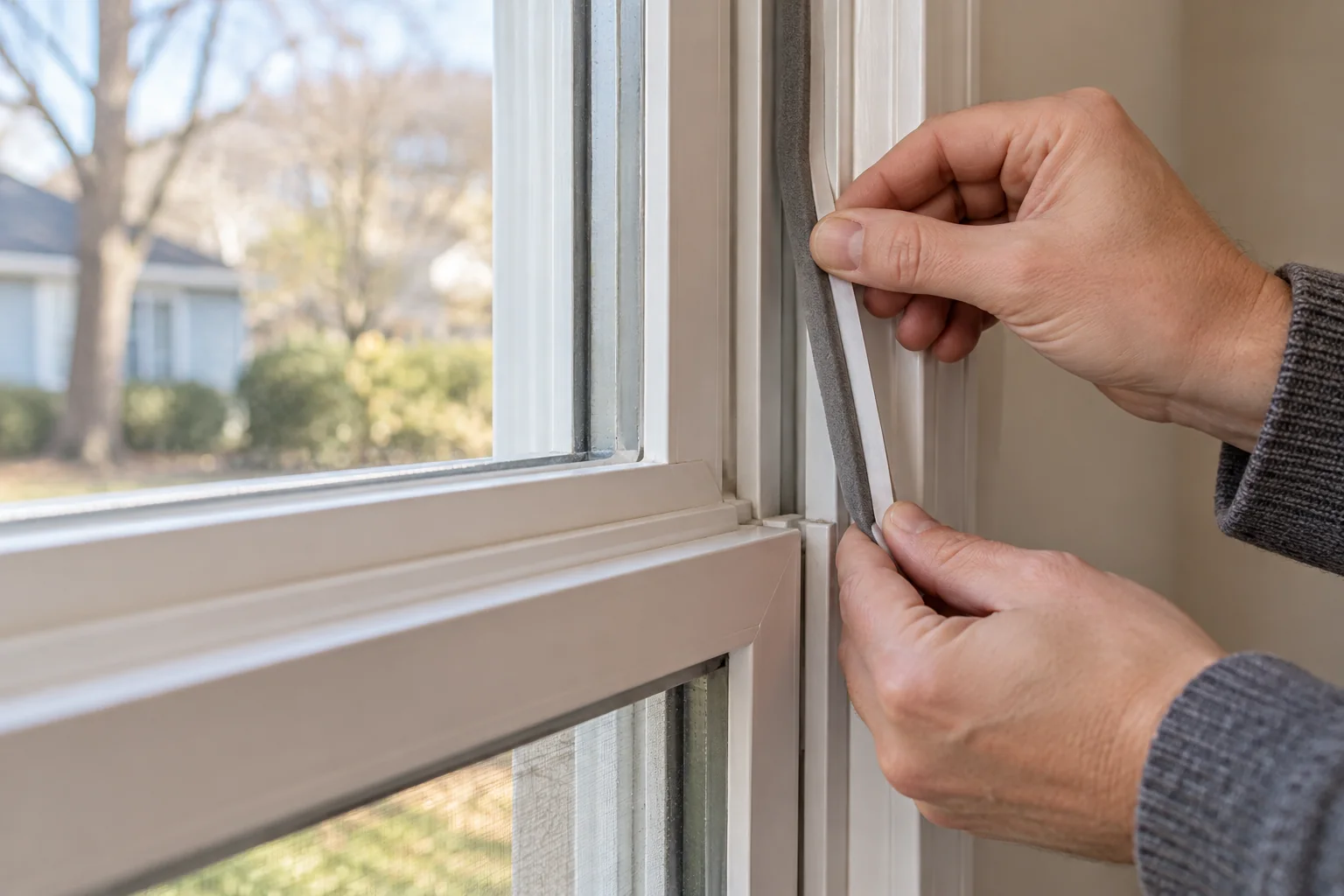
Inspect gaskets and weatherstripping only where you can see them. A compressed strip may be replaceable with a matching profile. Do not pile several layers of adhesive foam into a gap; this can prevent latching and create a new security or water problem. Measure the gap and follow the window maker's guidance. A strip should compress appropriately without requiring excessive force to close the sash.
Consider the wall-frame joint
Air can leak at trim or where the window frame meets the wall. Interior caulk may be appropriate for a small, dry, stationary gap, but the correct seal depends on construction and moisture management. Do not caulk a wet gap or a place designed to drain. If staining, soft plaster, or peeling paint surrounds the opening, investigate water entry before sealing it. Exterior work at height belongs to qualified people with proper access equipment.
A professional can use appropriate diagnostic methods to distinguish leakage through the window assembly from leakage around its installation. Describe when the draft occurs and where you feel it.
Choose a reversible improvement
Use weatherstripping approved for the window material and the specific moving joint. Measure the gap, clean and dry the application area, and follow the product instructions so the window can still close and operate safely.
A lined curtain can help with comfort near cold glass, but keep fabric clear of heaters and allow appropriate airflow to reduce persistent condensation. A removable interior film may also be an option where the manufacturer and lease permit it.
Choose a reversible first improvement
Start with a safe, removable measure that addresses the identified path. Refit a loose weatherstrip, adjust a curtain, or use a manufacturer-approved temporary product. Test the window afterward: it should still open, latch, and drain. Do not cover a required ventilation opening or an emergency escape window in a way that prevents use. Keep locks and handles accessible. A comfort fix that compromises safe operation is not a successful fix.
If adding a draft stopper at the sill, make sure it stays dry and does not conceal condensation. Remove it periodically to inspect the frame. A seal that appears to stop cold air may also reduce drying, so watch for moisture. If the glass itself is the cold source rather than an air leak, consider thermal curtains or other treatments that do not trap persistent water against the surface.
Match the product to the frame
Adhesives can lift paint or leave residue on older finishes. Test in an inconspicuous spot and follow removal instructions. Metal, vinyl, and wood frames respond differently to temperature and cleaning products. If the finish is already peeling or the wood is soft, repair the substrate first. Do not fasten a product through the frame without knowing its construction and warranty. A low-cost strip can cause expensive damage if placed over a drainage path or sash mechanism.
When evaluating replacement windows, request an assessment of the existing installation and the room's ventilation needs. Replacement may not be necessary for a small hardware or weatherstrip fault, and it will not fix a wall leak outside the window.
Review the result safely
On another cool day, check whether the same spot still feels drafty. Make sure emergency exits, locks, and ventilation features continue to work. A room that remains cold may need a wider assessment of heating and insulation.
If water enters, the frame is soft, or condensation is trapped between glazing panes, report the issue promptly. A comfort strip should not conceal a repair need.
Compare before and after under similar conditions
Test after the next windy or cold period, not only on a calm afternoon. Does the tissue still move at the original gap? Does the room feel more comfortable at the same thermostat setting? Does the window operate normally? Check for new condensation, water marks, or a damp smell. Keep a short note of the product used and where it was installed. If the improvement disappears after the sash is opened once, it may not be durable enough for daily life.
Do not rely solely on an infrared image without interpreting it in context. A cold patch can show a surface-temperature difference without proving the exact air path. A professional can combine observations and measurements when the cause remains unclear.
Know when a larger repair is needed
Water entering around the frame, a rotten sill, failed glazing, a sash that will not lock, or recurring moisture inside the wall warrants professional attention. If the window serves as an emergency exit, maintain its opening function throughout any repair. In a shared building, report exterior or structural defects through the appropriate management channel. A temporary curtain or film can improve comfort while the repair is arranged, but it should not hide active damage.
The sensible sequence is to identify whether the discomfort is moving air or a cold surface, check operation and moisture, try a reversible measure, then verify safety and performance. That is more reliable than sealing every visible opening with caulk. A comfortable window should also remain usable, secure, and able to manage water as designed.
When comparing comfort, measure what the household can actually notice: where the cold sensation occurs, whether the sash latches easily, and whether condensation appears after the change. A temporary treatment that feels warmer but leaves a wet sill should be reconsidered. Note the weather for each observation so a calm day is not mistaken for proof that an air leak has been fixed. A few consistent checks are more useful than a single dramatic before-and-after test.
Compare options against the room you actually have
A product recommendation is useful only when the room's constraints are clear. Record the dimensions, existing finishes, amount of daylight, moisture exposure, and how the space is used on a normal weekday. Choose two or three criteria that matter most rather than trying to optimize every feature. For a busy household, ease of cleaning and repair may outweigh a perfect showroom appearance. For a low-use room, visual comfort may matter more. Write down your priorities before viewing samples so a dramatic display does not reset them.
Test a sample where it will be used. Look at it in daylight and evening light, beside the fixed elements that are staying. If the decision involves a product, read the maker's care and installation instructions for the exact model. An appealing material that requires a maintenance routine the household will not follow is a poor fit, even if it performs well in a brochure.
Keep the decision reversible where possible
Begin with changes that can be moved, sampled, or returned before committing to demolition or permanent installation. Check the return policy and sample-size limits. Photograph your before condition and keep notes on the trial. After a few days of ordinary use, ask what improved and what became less convenient. This reveals tradeoffs that are easy to miss during a quick purchase.
If work requires wiring, plumbing, structural changes, or disturbing unknown old materials, involve appropriately qualified people. Ask for the total scope and what will be visible when the job is finished. The right choice is not simply the most popular option; it is the one whose limitations you understand and can live with. A deliberate small test often prevents an expensive correction.
Frequently asked questions
Should I seal every visible gap?
No. Some gaps are part of drainage or ventilation. Identify the window system before adding material.
Will curtains stop an air leak?
They can improve comfort near cold glass but do not repair a leaking or damaged window joint.