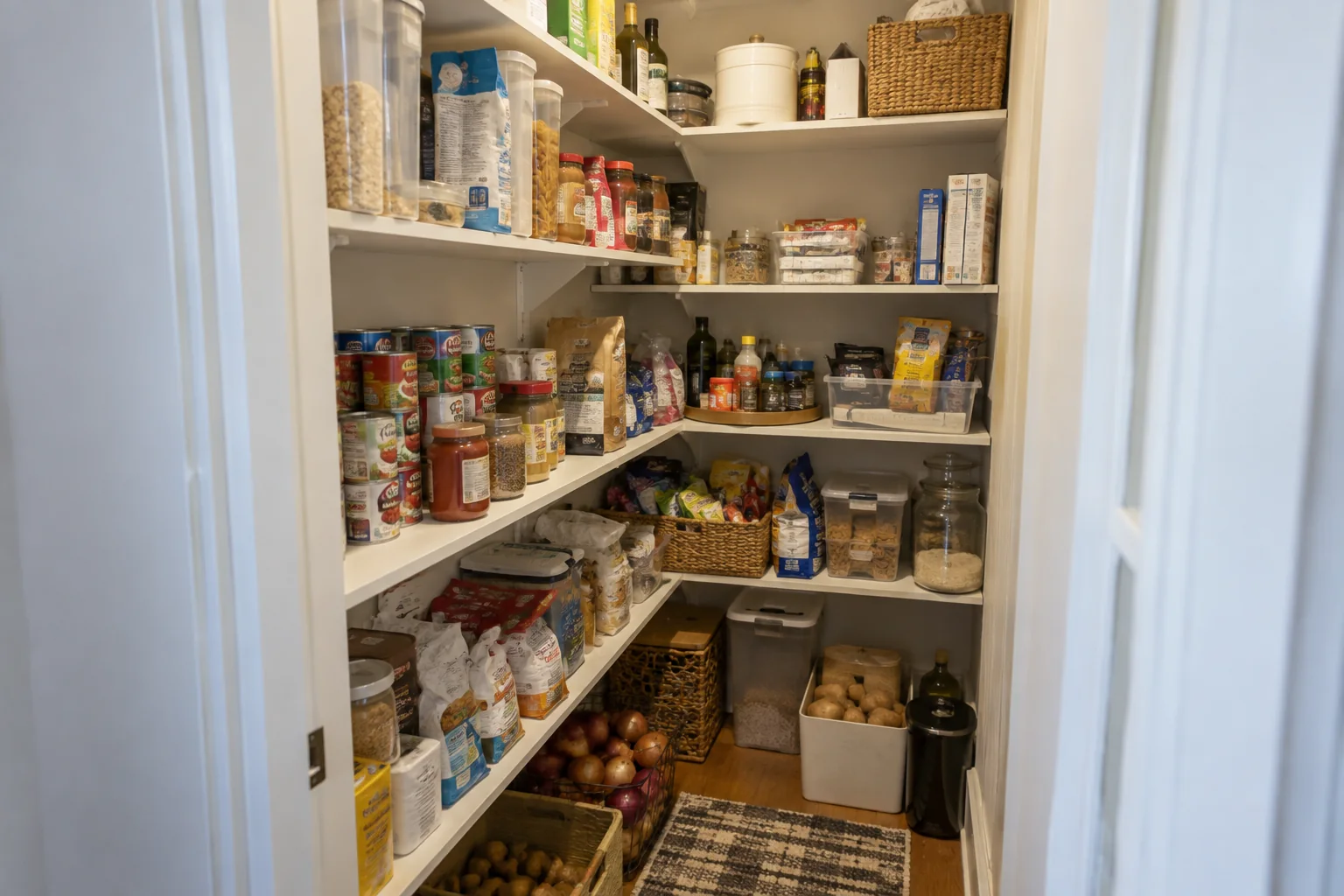
Empty one shelf at a time, group food by use, put daily items within easy reach, and create a visible use-first area before buying storage containers.
A small pantry works best when you can see what you own and put it back without rearranging three other things. Matching containers are optional. Start with the foods you actually cook and the shelf dimensions you already have.
Begin with the most useful changes
Work through one shelf at a time. Check packaging condition and dates, then clean and dry the shelf. Set aside items you no longer use rather than immediately returning them to the same hidden corner.
If you decant food, keep ingredient, allergen, cooking, and date information with it. Do not top up an old batch endlessly; empty and clean the container when appropriate before refilling.
Take stock without creating chaos
Work through one shelf at a time. Check packaging condition and dates, then clean and dry the shelf. Set aside items you no longer use rather than immediately returning them to the same hidden corner.
Measure shelf height and depth before buying bins. Include space to lift a container out; a box that technically fits may still be awkward to use.
Define a small work zone first
Emptying an entire pantry onto the kitchen floor can make the job harder than the disorder you started with. Choose one shelf or one category, and clear a counter for sorting. Keep food away from cleaning products and from raw-food preparation areas. Have a bag for expired or damaged packaging, a cloth for the shelf, and a place for items that belong elsewhere. Photograph the pantry before you start so you can see which shelf positions were convenient, even if the arrangement was messy.
As you handle each item, check the date, seal, and package condition. A date label does not always mean food becomes unsafe the next day, but damaged packaging, pests, or signs of moisture need attention. Follow official food-safety guidance for uncertain products. Do not pour unknown older contents into an unlabeled container merely to make the shelf look uniform. The original package may carry allergens, preparation instructions, a lot number, or storage directions that matter later.
Measure usable space, not just shelf width
A small pantry may have a deep but narrow shelf, a high gap above short items, or a door that limits access. Measure width, depth, and the clear height between shelves. Check whether the door closes when a basket is placed near the front. A container that fits on an empty shelf may block a hinge or hide a second row of food. Before shopping, test with boxes and baskets already in the home. The best organizer is one that can be lifted and returned without moving six other items.
If shelves sag or feel loose, address their support before adding heavy canned goods. Keep heavier items at a comfortable lower level, not on a wobbly high shelf. Store frequently used ingredients where the person who cooks can reach them without a step stool. For households with children, consider which foods or sharp items should remain out of reach.
Group by the way you cook
Create zones such as breakfast, baking, snacks, and everyday dinner ingredients. Put the most-used items at comfortable reach. Keep heavy packages low and rarely used lightweight supplies higher.
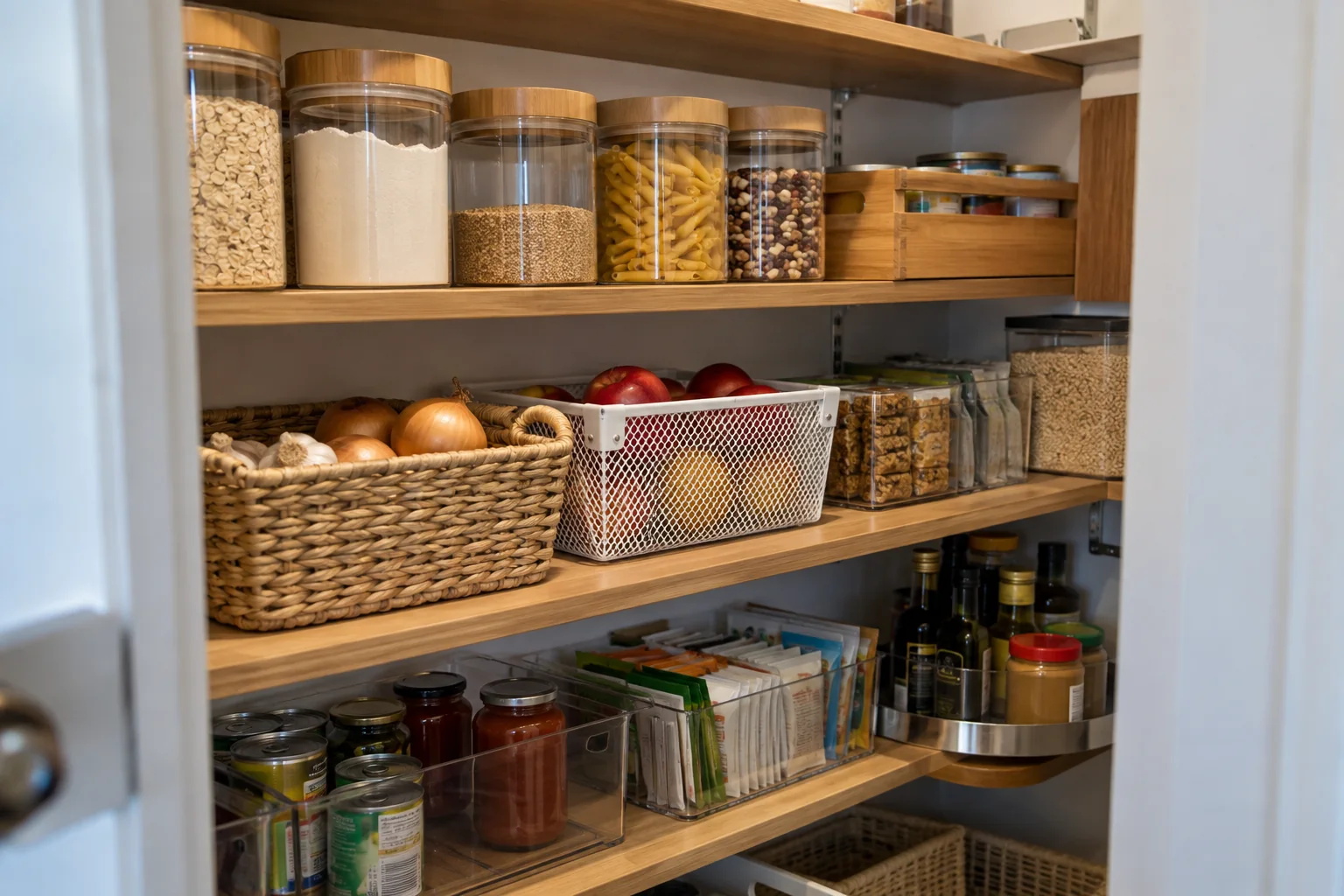
Use a shallow tray for small packets or spices. Avoid stacking so high that taking one item out topples the rest. Deep shelves may work better with a pull-out bin than another riser.
Group by actual cooking routines
“Baking,” “breakfast,” and “weeknight dinners” can be more useful categories than a rigid alphabetic system. Put items that are used together near each other, but do not hide every package inside an opaque bin. A category should be easy to scan and easy to return after grocery shopping. If the pantry is shared, ask other users what they look for most often. A system that only the organizer understands will not last.
Use a front row for open packages and a back row for unopened replacements, or another clearly understood rotation method. Put newer purchases behind older ones when appropriate so food is used before it is forgotten. Label a bin by category, not by one brand that may change. For deep shelves, a pull-out basket can reveal what is at the back, but check its load rating and the shelf's support. A turntable may work for small jars but be awkward for tall or heavy bottles.
Make containers earn their space
Clear containers can show quantities, but transferring every item costs time, money, and sometimes freshness. Use them where the original package is difficult to reseal or where seeing the amount genuinely changes how you shop. Keep the original label or record the product name, allergens, preparation instructions, and best-before information. Choose a container that closes properly and can be cleaned. A beautiful row of identical jars is not a success if the family cannot tell which flour is which.
Avoid buying a whole set before testing one or two sizes. Place the filled container on the intended shelf and try removing it with one hand. Check whether it wastes vertical space or prevents the door from closing. Different package shapes may be more space-efficient left as they are.
Preserve useful package information
If you decant food, keep ingredient, allergen, cooking, and date information with it. Do not top up an old batch endlessly; empty and clean the container when appropriate before refilling.
Use food-safe containers suited to the item. Clear labels matter more than an expensive matching set, especially when several household members use the pantry.
Preserve information and reduce waste
When decanting dry goods, copy the date and batch information in a way that stays with the food. This can matter for recalls and dietary needs. Do not mix new contents with old remnants without considering age and cleanliness. Wash and dry a container fully before refilling it. Keep allergen-containing products clearly identified. If the household includes someone with a serious food allergy, organization must support separation and accurate labeling, not just visual uniformity.
Look for signs of pests, dampness, or a spill while the shelf is empty. Clean and dry the area before returning food. If packages have been chewed or contaminated, follow appropriate disposal and pest-control guidance. Do not place food back against a wet wall. A recurring damp shelf may point to a building or plumbing problem that bins will only conceal.
Use a simple inventory
A small list of frequently repurchased staples can prevent duplicates. It does not need to record every spice. Write down the items the household often discovers are missing at dinner time, and keep the list where shopping happens. When a backup moves to the front, add it to the shopping list. This creates a straightforward replenishment signal. If you keep too much extra stock, the pantry becomes harder to rotate; buy to the space and the household's actual use.
Check a few weeks later whether items stayed in their categories. If one shelf keeps becoming cluttered, the category may be too broad or its location inconvenient. Adjust the system rather than blaming the people who use it.
Make restocking easy
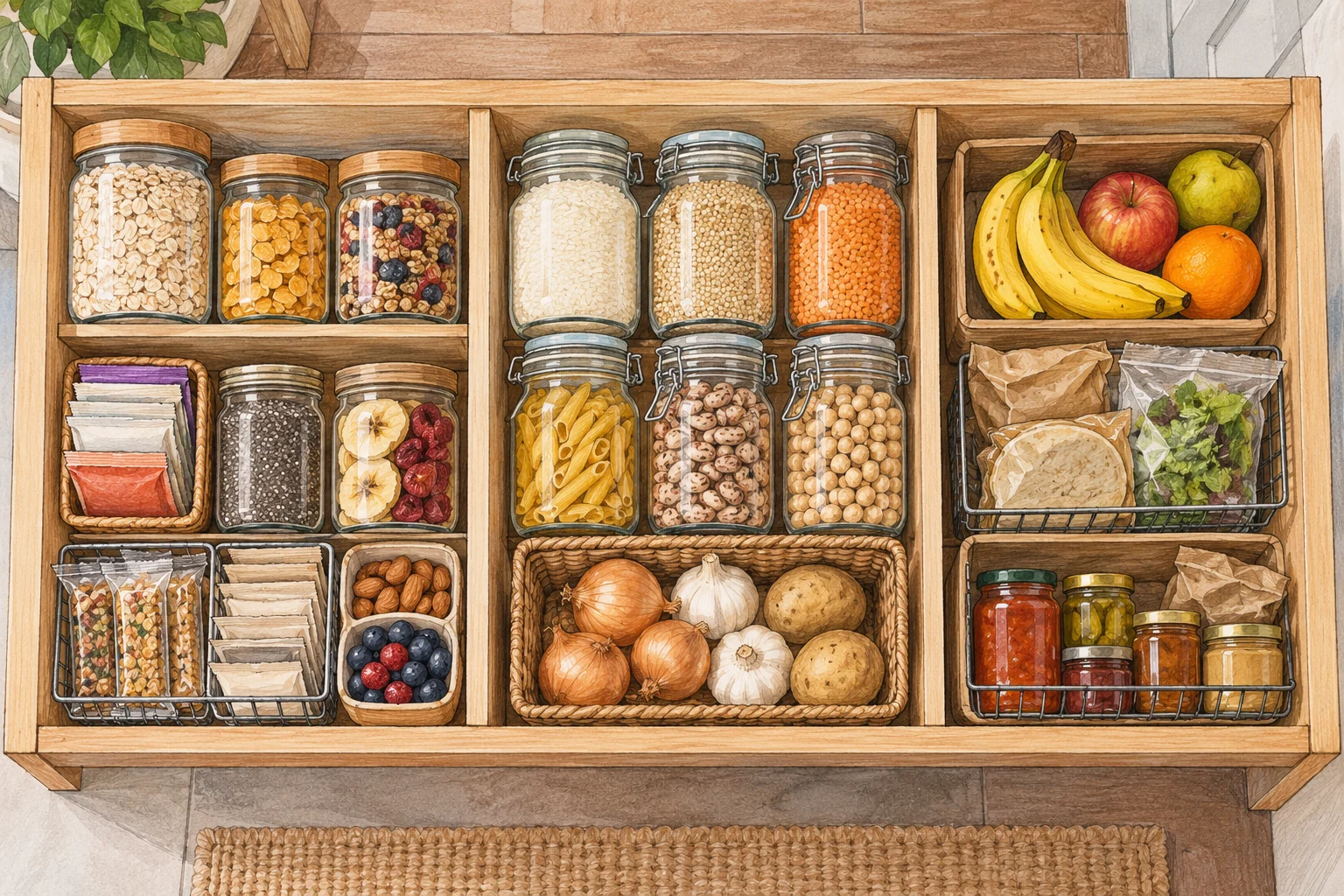
Place older suitable items toward the front and keep a small use-first zone visible. Before shopping, check that zone and the staples shelf. Leave some free space so groceries can be put away without rebuilding the system.
After a week, move anything that people consistently return to a different place. A useful arrangement fits habits instead of depending on perfect behavior.
Make restocking a two-minute job
Leave a little open space so new groceries have a temporary landing place. Put common items at eye level and seldom-used items higher or lower according to safe reach. A labeled basket for snacks or baking supplies should pull out without lifting a heavy stack. Keep a small cloth nearby so spills can be wiped before they dry. Return products to the same zone after each shopping trip. A pantry that requires a full reorganization every week has too many rules or too little visible access.
Choose maintenance checkpoints linked to existing habits. A quick scan before making a shopping list can find nearly empty staples and forgotten produce. A deeper shelf wipe can happen when a zone is naturally running low. This is more sustainable than a monthly total reset. Rotate food and review damaged packaging as part of the routine.
Keep non-food hazards separate
Household chemicals, pesticides, and cleaning products should not share food storage in a way that risks spills or confusion. Store them in their original labeled containers in an appropriate separate location. Do not reuse a food container for chemicals. If the pantry also holds appliances or tools, keep blades, cords, and batteries from falling onto food or being reached by children. Organization should make the storage safer, not merely neater.
The best small-pantry layout is easy to see, reach, and restock. It preserves product information, limits waste, and lets everyone in the household find what they need. Start with one shelf, choose categories based on real meals, test containers before buying many, and revise the arrangement after ordinary use. The result should work on a rushed weekday, not only in a staged photograph.
Review the room in use
A room makeover should make ordinary routines easier. Spend a day noticing where items accumulate, where people bump into each other, and which surface is hard to reach or clean. Record one or two friction points before choosing finishes. After the first change, use the room normally for a few days. A clearer counter or brighter corner may help more than a dramatic new item that consumes floor space. Keep the changes that improve movement and access, not merely the photograph.
Measure before buying furniture, storage, or mirrors. Leave enough clearance for doors, drawers, and people to move. Check the installation requirements for anything mounted on a wall, including the wall type and hidden services. A lightweight decorative change and a heavy wall cabinet are different projects. If the room has water or electrical risks, stop at planning and use qualified help for the technical work.
Build a layered result
Most rooms benefit from several modest choices working together: light, storage, surface color, and a clear path through the space. Evaluate each layer against the same goal. If a new lamp creates glare, adjust its position rather than adding another. If storage makes the room feel crowded, remove or relocate items before buying more containers. Small revisions are part of the process, not evidence that the first plan failed.
Keep product details and paint colors in a home note. Photograph the room in its usual light after each meaningful change. That record helps you decide whether the next purchase is necessary. A successful makeover is not the most elaborate one; it is a room that feels more comfortable and functions better on an ordinary day.
Frequently asked questions
Do I need airtight containers for everything?
No. Choose storage based on the food and its original guidance, and preserve label information.
How do I use a deep shelf?
Group small items in a shallow removable bin so you can bring the back of the shelf into view.