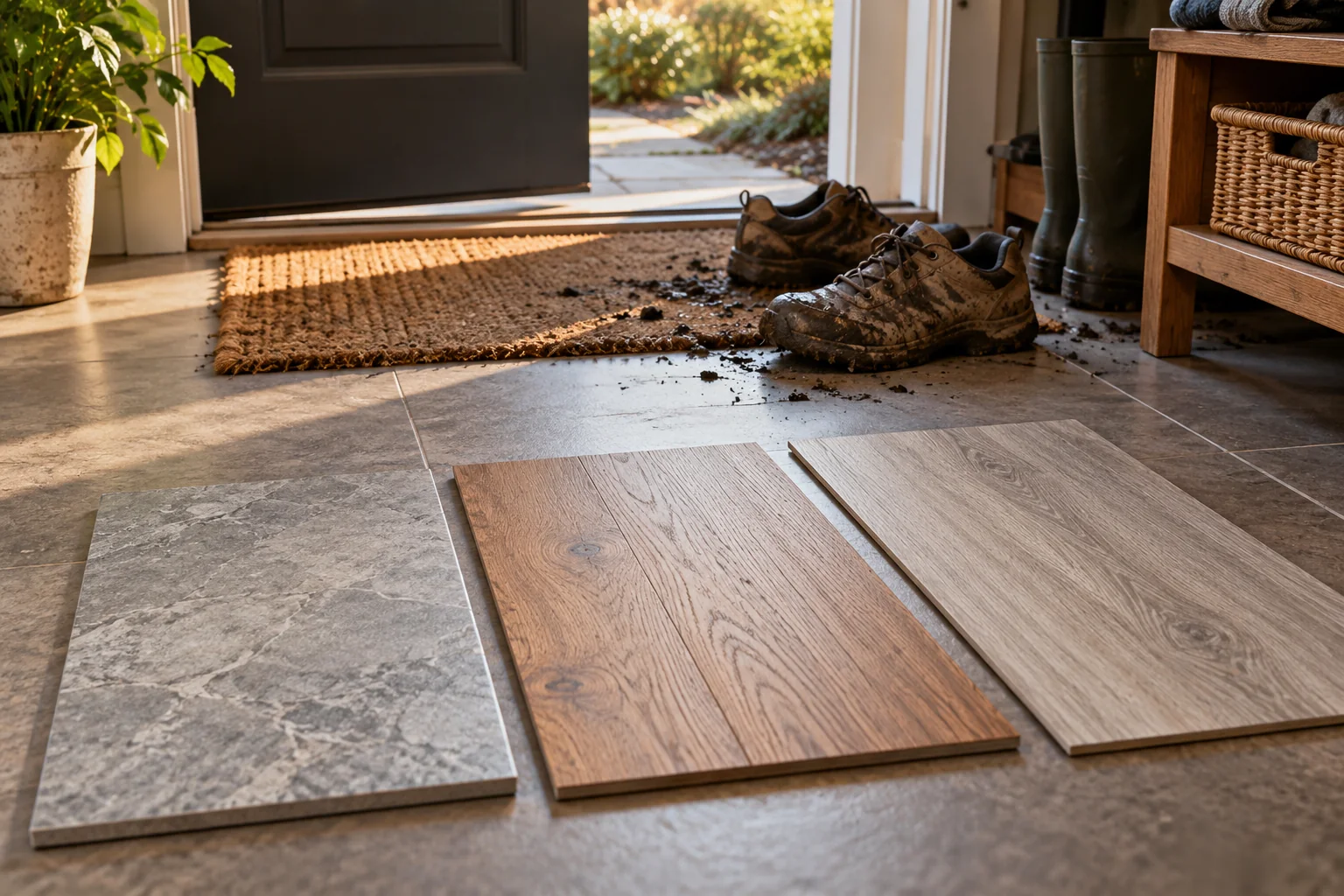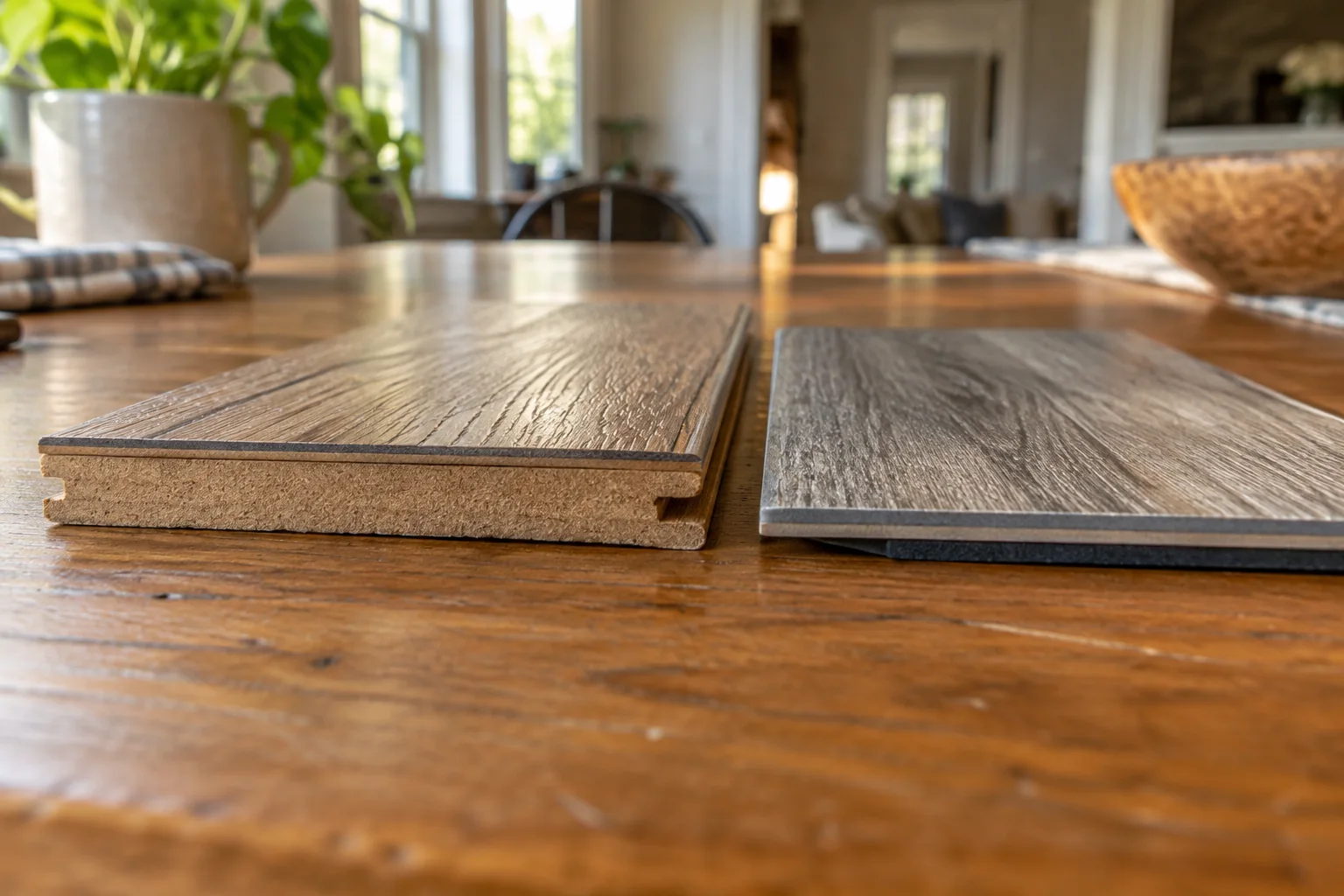
Laminate generally uses a wood-based core with a decorative surface; vinyl uses a different layered construction. Product-specific water limits, wear ratings, and installation instructions matter more than broad labels.
Two floors can look almost identical in a photo while behaving differently under a leaking appliance or a chair leg. Use the room conditions to guide the comparison. The cheapest box is not necessarily the cheapest completed floor.
Compare what matters
| Check | Laminate | Vinyl |
|---|---|---|
| Core | Usually wood fiber | Flexible or rigid layered construction |
| Water exposure | Check exact product limits | Check joints, edges and installation limits |
| Preparation | Suitable flat subfloor | Suitable flat subfloor |
| Repair | Confirm replacement plank access | Confirm product-specific repair method |
Understand the construction
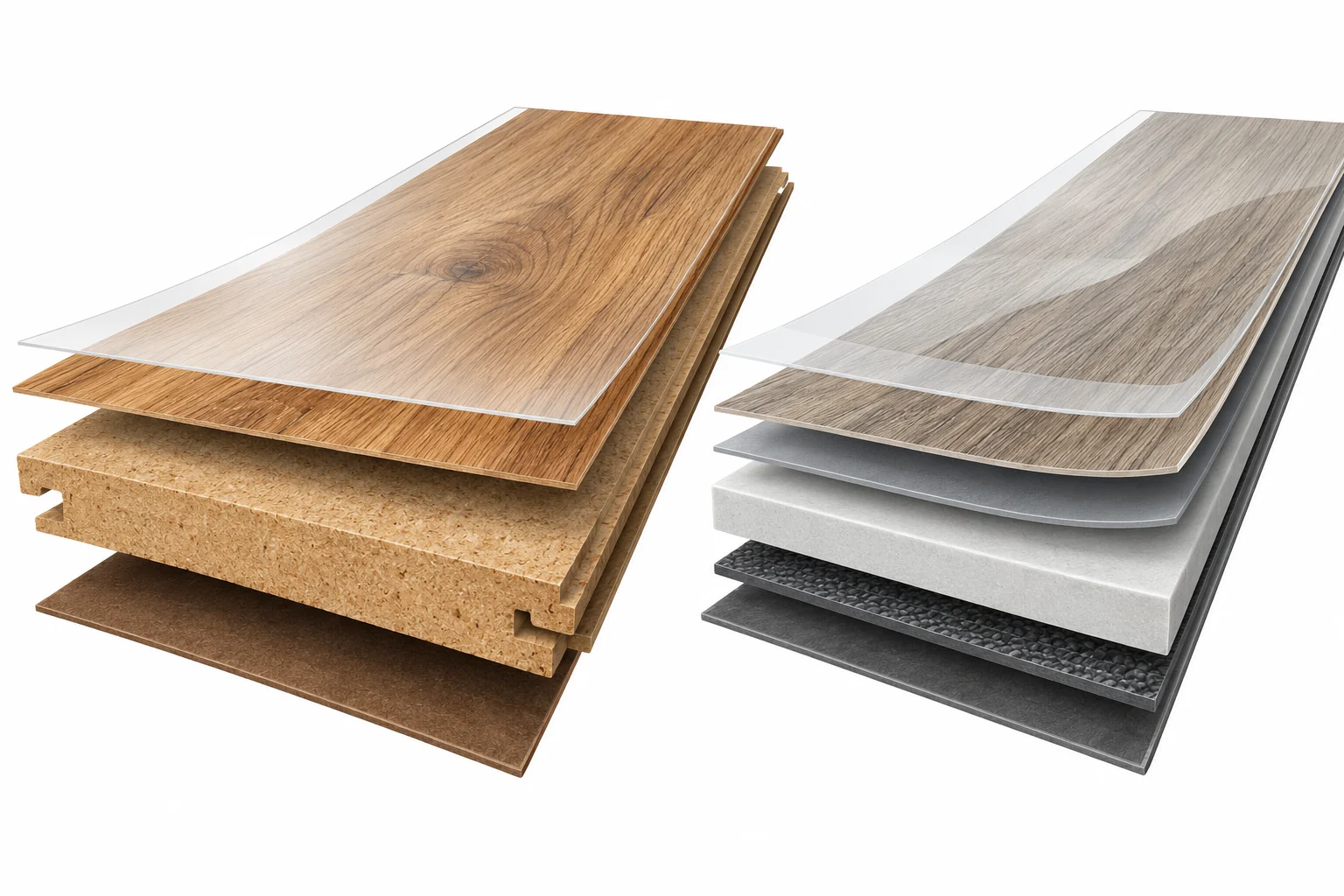
Laminate typically has a wood-fiber core, a decorative layer, and a wear surface. Vinyl products include flexible and rigid constructions with different core and wear-layer designs.
These descriptions are categories, not universal performance promises. Check the technical sheet for the exact product, including temperature limits and compatibility with your heating system.
Compare construction, not just appearance
Laminate generally uses a decorative surface over a wood-based core, while vinyl products use different synthetic layers and may be flexible or rigid. Both can imitate timber or stone, but their construction influences thickness, sound, water behavior, installation, and repair. Product names can blur categories, so request a specification sheet for the exact plank or tile. Ask what the core is, how pieces join, and whether the surface is intended for your room and subfloor.
A sample viewed only from above hides important details. Look at the edge profile and backing. Does it need a separate underlayment? Is it approved over an existing floor or heating system? What flatness and moisture limits apply? The answers come from the manufacturer, not from a generic comparison chart. Two vinyl products can differ more from each other than one vinyl product differs from a laminate plank in day-to-day feel.
Understand the installed thickness
Floor height affects doors, thresholds, stairs, and appliances. A thicker plank may feel substantial but can create clearance problems. A thin product may follow unevenness in the subfloor unless preparation is done correctly. Measure the total assembly, including any required underlayment. Ask the installer to show how it meets adjacent rooms and whether baseboards or door bottoms will change. A product that looks cheaper per square foot may need more preparation to perform well.
Do not lift an unknown old floor or adhesive simply to inspect the substrate. Older materials can require specialist assessment. Plan the investigation with an appropriately qualified installer.
Read water claims carefully
A water-resistant surface is not permission to leave spills indefinitely. Warranties can limit exposure time or require specific perimeter details. Moisture below the floor is a separate issue from a spill on top.
For bathrooms, laundry rooms, or ground floors, ask whether that exact product is approved and what preparation is required. Neither choice fixes a damp subfloor.
Read water claims precisely
“Waterproof” on a plank package does not mean that an installed floor protects the building beneath it from a leak. Water can pass through joints, reach an edge, or remain trapped below the surface. Check the maker's limits for standing water, wet mopping, bathrooms, kitchens, and warranties. Laminate with a wood-based core may be especially sensitive at edges, but performance varies by product and installation. Vinyl is often selected for moisture-prone rooms, yet its joints and subfloor still matter.
Think about the likely water event. A small kitchen splash cleaned quickly differs from a dishwasher leak discovered the next morning. Ask how the floor would be opened, dried, and repaired after such an event. In a bathroom, confirm the product and installation method are specifically approved for that use. Do not substitute a floating floor for waterproofing that the room requires.
Check cleaning and comfort
Compare the approved cleaning methods. Can the floor tolerate the household's normal mop routine? Does the maker prohibit steam cleaning or certain detergents? Underfoot comfort and sound can depend on the subfloor, underlayment, plank structure, and room acoustics, not just the surface name. Walk on full-size installed samples if possible. Listen for a hollow sound and note whether the floor feels hard, warm, or slightly resilient. The best choice may differ between a quiet bedroom and a busy hallway.
A floor with a convincing embossed texture can also hold more dirt in its grooves. Take a sample home and wipe it with the method you would actually use. This practical test is more informative than a color swatch.
Compare comfort and sound
Underlay, substrate, and installation affect how a floor feels and sounds. Do not add extra cushioning unless the manufacturer allows it; too much movement can stress locking joints.
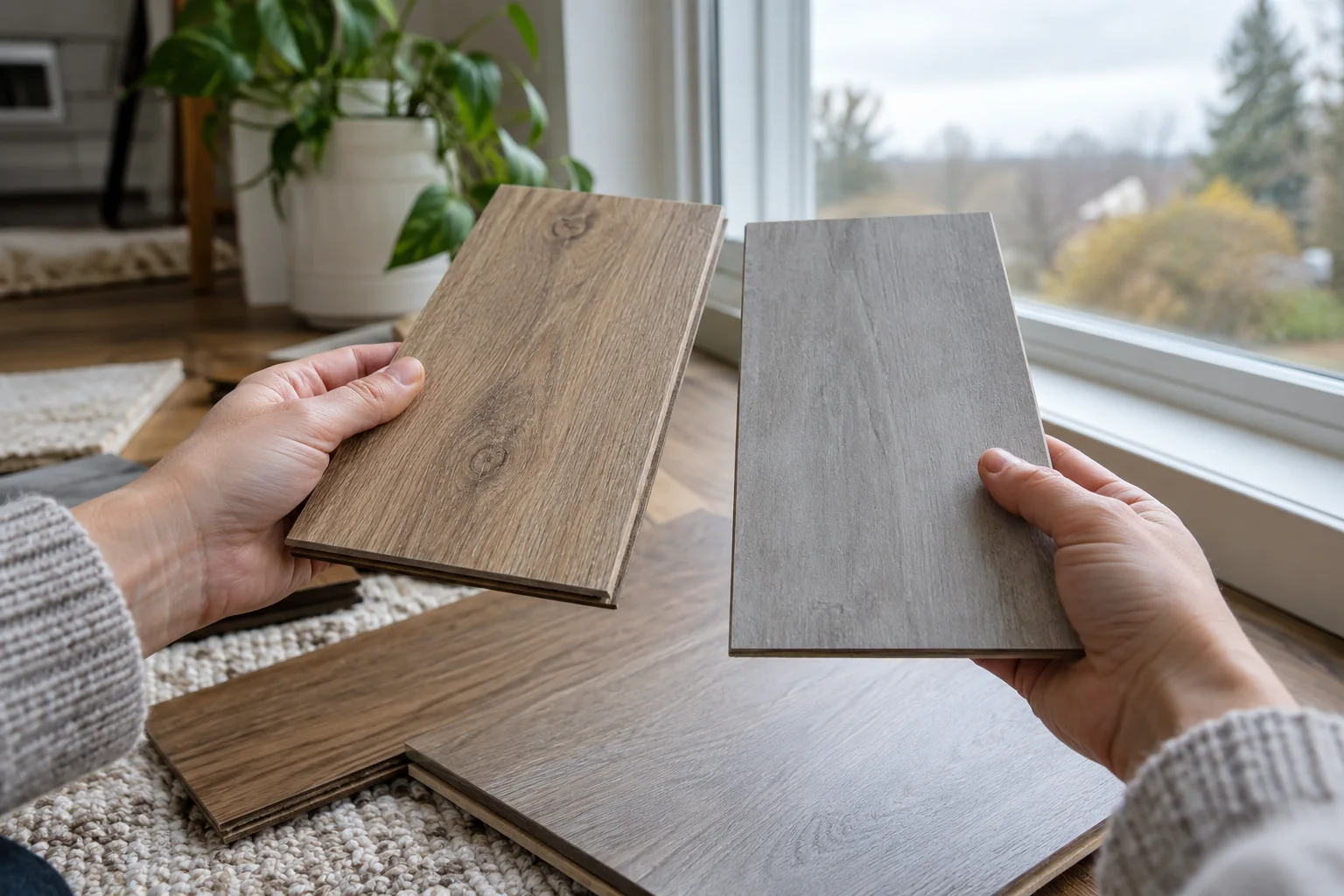
Take samples home and compare them beside existing finishes. A showroom display may not reveal how footfall sounds in your room.
Compare repair, not only purchase price
Ask how a damaged plank would be replaced. With some floating systems, reaching a middle plank may require removing pieces from a wall; other methods have different repair options. Adhesive-down products can have their own removal challenges. Confirm the repair method for the exact model and installation. Keep spare material if the maker recommends it, along with the product code and lot. A matching print may change between production runs.
Include subfloor preparation, underlayment, transitions, trim, labor, disposal, and waste in the quotation. The price of the plank alone is not the project cost. Ask what the installer will do if the old floor conceals unevenness or moisture. A sound installation may cost more upfront but avoid gaps, movement, or early wear. Make sure the quotation identifies responsibility for moisture testing and any warranty documentation.
Evaluate sunlight and heat
A room with strong sun or a heating system needs product-specific temperature guidance. Ask about expansion, fading, and approved window conditions. Do not assume that an image of a sunny room in a brochure proves suitability for your floor-to-ceiling windows. Test samples in the room's real light for color and glare, but use the written specification for performance limits. If the material will continue through several rooms, consider how expansion joints and transitions are handled.
A plank can be beautiful yet unsuitable for a particular subfloor or temperature range. Eliminate incompatible products before comparing small differences in shade.
Plan installation and future repairs
Floating installations need the specified movement gaps and suitable transitions. Glue-down products have their own substrate and adhesive requirements. Follow the instructions for the chosen system rather than mixing methods.
Keep spare material from the same product run where practical. Ask how damaged planks are replaced and whether permanent cabinets can be installed over the floor.
Build a room-by-room decision
For a dry bedroom, comfort and appearance may carry more weight. For an entry, grit, wet shoes, and cleaning speed may dominate. For a kitchen, consider both daily spills and the possibility of an appliance leak. Write down the top three requirements for each space, then compare specific laminate and vinyl products against them. Avoid declaring one category universally superior. A well-chosen product in the right room is more valuable than a broad label.
Bring home large samples. Look at repeated patterns, edge detail, and color beside cabinets and trim. Stand on them if practical and compare in daylight and evening light. Ask the retailer for the care guide and warranty before purchase, not after installation. If one product needs a maintenance practice the household will not follow, remove it from the shortlist.
Verify the installation plan
Before work starts, confirm the subfloor is assessed, the intended underlayment is correct, and transitions are designed. Ask how the installer will deal with door clearances, cabinets, and moisture. After installation, inspect gaps, movement, damaged planks, and trim before the room is refurnished. Save the product information and a small spare piece if appropriate. Follow the cure or acclimation guidance before heavy furniture is returned.
The useful answer to “laminate or vinyl?” is a documented choice for a specific room. Construction tells you what questions to ask; water limits, subfloor needs, sound, repair, and total installed cost decide whether a particular product fits. That is more dependable than buying whichever sample has the most convincing wood grain.
It also helps to compare how the room will be cleaned when life is busy. Ask whether a damp mop, vacuum brush, and common spills are permitted by the exact warranty. If the product requires immediate drying of every small splash, be honest about whether the household will do that. Look at the bevel and edge color on a large sample; a printed wood pattern can look convincing from above but reveal a different material at the joints. Walk across an installed display in ordinary shoes and listen for hollow sound. A quieter floor may owe much of that result to its underlayment and subfloor, so ask which parts of the display assembly are included in your quote. If you are replacing only one room, compare the new floor height and color with the hallway before ordering. A visually attractive material can feel like a poor fit when it creates a raised threshold or an awkward transition that you cross every day.
Compare products as installed systems
A sample board cannot show every result of an installation. Ask how the material performs with the actual subfloor, moisture conditions, transitions, and maintenance routine in your room. Read the exact product specification rather than relying on a category name. Two products sold under the same broad label may differ in construction, wear layer, warranty limits, and repair method. Request written details for the specific model and finish you intend to buy.
Price the complete project, including preparation, underlayment where required, trim, waste, delivery, labor, and later maintenance. A lower shelf price can become a higher installed price if the room needs extensive leveling or special transitions. Ask the installer what conditions would change the quotation once the old surface is exposed. If the existing material may contain hazardous components, arrange the proper assessment before removal.
Plan for damage and replacement
Imagine a single area scratched, stained, or lifted two years later. Can one plank or tile be replaced, can the surface be refinished, or would a large area need work? Keep a small amount of matching material only if it can be stored safely and the maker recommends it. Document the product code, color, lot if relevant, and installation method. Replacement materials may look different after years of wear even when the product name is unchanged.
Bring samples into the room at different times of day. View them next to cabinets, walls, and natural light; walk on them if a display allows it. A useful choice fits the room's water exposure, comfort, sound, cleaning habits, and repair plan. Marketing labels such as “waterproof” or “commercial grade” are starting points for questions, not substitutes for the product's installation and warranty documents.
Frequently asked questions
Can both go over an existing floor?
Sometimes, but only if the product permits it and the existing surface meets the required condition and flatness.
Which is better with pets?
Compare scratch resistance, traction, spill limits, and maintenance for the exact products. Neither category guarantees resistance to every pet-related issue.