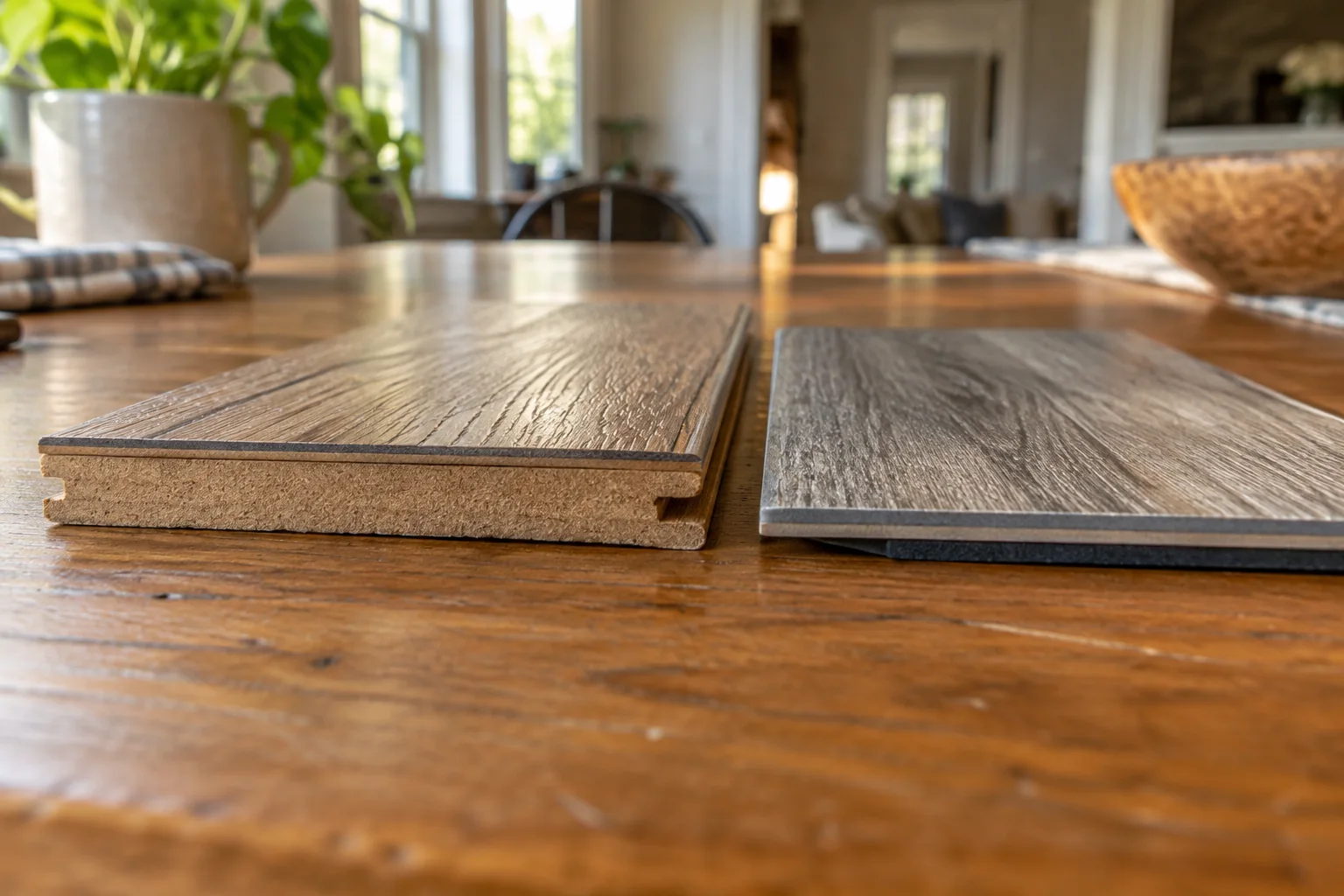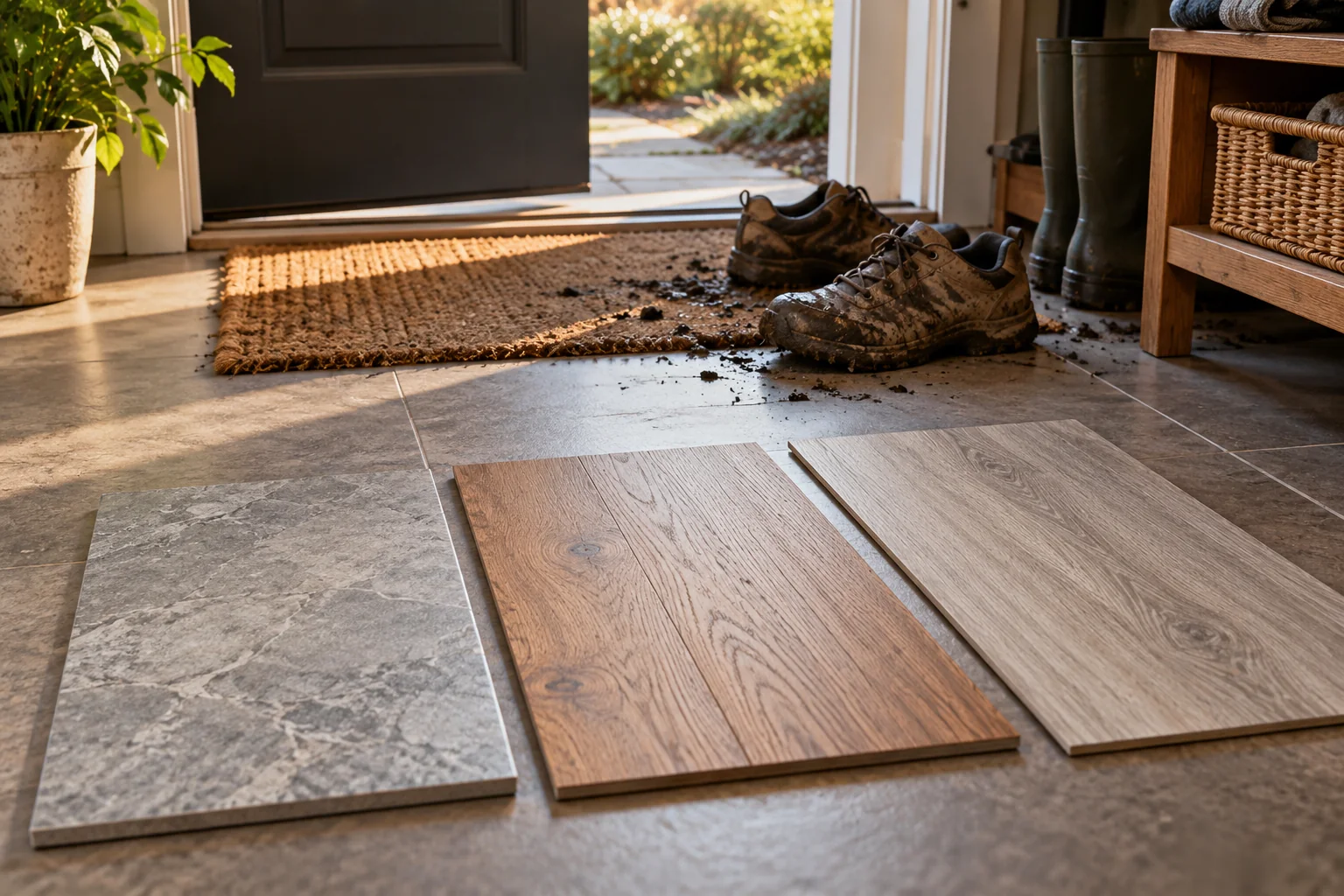
The best choice depends on moisture, grit, comfort, and how you will repair wear. Compare the exact product's wear rating and installation requirements, not just the material name.
An entryway with wet shoes is different from a busy upstairs hallway. Both get traffic, but they do not face the same conditions. Start with the room's toughest everyday problem and use that to narrow the options.
Compare what matters
| Situation | Possible direction | Before you decide |
|---|---|---|
| Wet entry | Porcelain tile with suitable slip characteristics | Assess installation and grout |
| Busy hallway | Durable product with repair plan | Check sound and underfoot comfort |
| Pets and grit | Product-specific wear rating | Use mats and routine grit removal |
| Long-term repairs | Keep matching spare material | Ask about plank or tile replacement |
Match the material to the room
Porcelain tile can suit wet, gritty entry areas when the specific tile has appropriate slip characteristics, but it feels hard underfoot. Grout and substrate preparation also matter.
Vinyl products vary considerably in wear layer, dent resistance, and installation restrictions. Laminate also varies in water protection. Read the actual warranty rather than treating a category label as a guarantee.
Define the traffic before naming a material
A hallway used by two adults has a different burden from an entry where wet shoes, pets, and grit arrive every day. List what the floor will face: tracked-in sand, rolling chairs, dropped toys, wet boots, sunlight, and cleaning frequency. Mark the exact zones that take the most wear. A dining room may be busy but mostly dry; a mudroom may be smaller yet exposed to much more moisture. “High traffic” describes movement, not the full performance requirement.
Look at the structure beneath the present floor. Is it level, firm, and dry? Does the door have clearance for a thicker product? Are there stairs, thresholds, or adjoining rooms to match? A durable surface installed over an unsuitable base can fail early. An installer should inspect and explain subfloor preparation before giving a final recommendation. Do not remove old flooring or adhesive when its composition is unknown; some materials require assessment before disturbance.
Weigh water and grit separately
Water resistance and scratch resistance are different properties. A product may tolerate a damp mop but not standing water at its seams. Another may resist scuffs but show every grain of sand under a chair. Read the exact product's installation and care documents. In an entry, a good mat system can intercept grit before it reaches the floor. In a kitchen, check the likely spill pattern and how quickly water will be wiped up. No floor eliminates the need to respond to a leak.
Consider slip risk as well, especially in wet entries or bathrooms. A glossy showroom sample may behave differently under wet shoes. Ask for product-specific slip information and test a sample under conditions that resemble ordinary use, without creating a hazard. Comfort underfoot and noise also matter in a long corridor or upper-level room.
Consider what repair looks like
Solid wood may allow refinishing, depending on its condition, while engineered wood has limits determined by its construction. Replacing a damaged plank in a floating floor may require access from an edge.
Ask for the repair method before purchase and keep suitable spare material. A durable floor that cannot be matched later may be harder to maintain than expected.
Decide how a damaged area would be repaired
Imagine a chair leaves a deep scratch near the doorway. Can a single plank or tile be replaced? Can the finish be refreshed? Would the damaged piece be trapped under cabinets or door trim? Repair access can matter as much as a long wear warranty. Ask the retailer or installer to demonstrate the proposed repair method for the exact product. A floor advertised as “durable” may still be difficult to patch invisibly.
Keep a few matching pieces if the manufacturer recommends it and you have dry storage. Record the color, product code, lot, and finish. A replacement purchased years later may vary in shade even under the same name. For a tiled floor, grout color and spare tiles also matter. For a wood floor, find out whether the wear layer can be refinished and how many times, rather than assuming every wood-look product behaves like solid timber.
Read warranty exclusions in context
A warranty may cover a manufacturing defect but exclude improper subfloor preparation, standing water, pet damage, or unsuitable commercial use. Ask what documentation is needed and who is responsible if the installed floor fails. Keep the quote, product specification, and installation instructions together. Do not rely on a large “lifetime” label without reading the scope. The practical question is what happens when the household's most likely wear event occurs.
A repair plan also includes matching the transition to adjacent rooms. If one area needs replacing, can it be separated neatly? A continuous floor across several rooms can look calm but may increase the area affected by a later repair.
Compare the full installation
Check subfloor flatness, moisture limits, transitions, door clearance, and underfloor heating compatibility. These details can determine success more than the surface pattern.
Compare total installed cost rather than only the price per box. Include preparation, underlay where required, trims, removal, and suitable maintenance products.
Compare the installed project, not only samples
The material price is just one line. Subfloor repair, moisture testing, underlayment, removal, disposal, trim, door adjustments, transitions, and labor can change the budget substantially. Ask each bidder to identify what is included and what might be discovered after the old floor is lifted. A quotation that skips preparation may look attractive but leave you responsible for it later. If an old floor or adhesive may contain hazardous material, arrange appropriate assessment before demolition.
Think about how installation will affect the household. Which rooms must be emptied? Can people use the kitchen or bathroom during work? Is there a cure or acclimation period? What happens at thresholds and stairs? An expensive material that disrupts the home longer than expected may not be the right choice for a time-sensitive project. Get these details in writing before buying.
Check care requirements against real habits
Some floors need particular cleaners, pads under furniture, or prompt drying after mopping. A household that regularly uses a wet mop should check whether that method is allowed. If pets bring grit, plan a mat and vacuum routine. If chairs roll, ask about casters and protective mats. Do not choose a surface solely on a sales claim and then discover that routine care conflicts with how the room is used.
Ask to see a larger installed example or take a sample home. Small boards conceal the pattern repetition that becomes obvious across a room. View the sample in morning and evening light and beside the existing trim. Texture can make a floor easier to live with by hiding minor marks, but it can also make cleaning grooves harder.
Test samples in real conditions
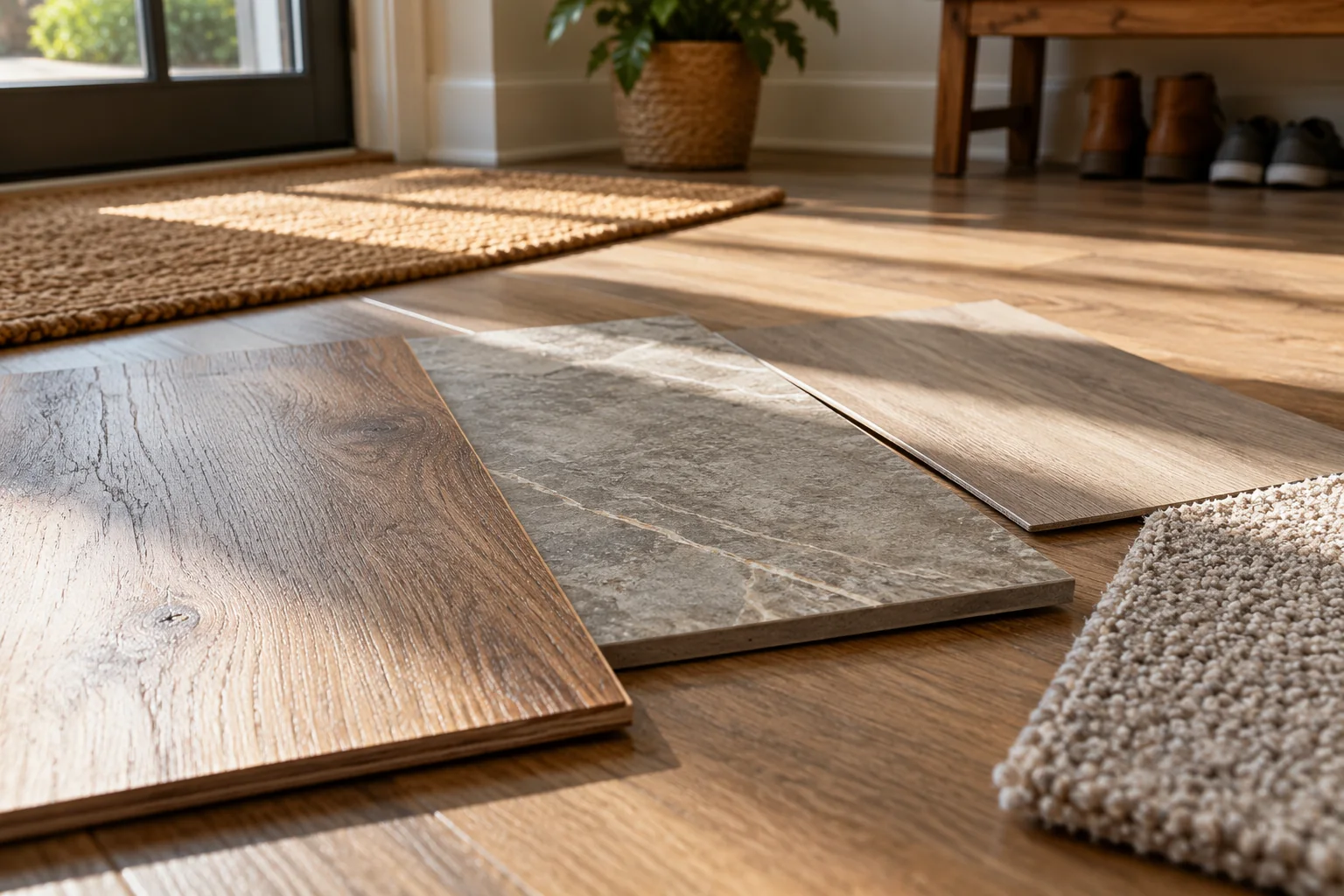
Place samples where you will use them and view them in morning and evening light. Assess texture, visible dust, and how the color relates to adjacent flooring. Do not damage samples to simulate tests the retailer has not authorized.
Choose a maintenance routine you will actually follow. Entry mats, grit removal, and furniture protection help every floor, but no surface is immune to neglect.
Test a shortlist in the actual room
Narrow the choice to two or three products that meet the moisture and durability requirements. Place large samples near the entry, furniture, and window. Walk on them in the footwear normally used at home. Look at the color under daylight and lamps. If the sample has a glossy surface, check for glare and visible dust. If it has a textured surface, consider how crumbs or pet hair will be removed. A good shortlist should survive these everyday tests.
Ask the installer to confirm compatibility with the subfloor and any heating system. Do not assume a manufacturer's generic installation video covers your building. Check minimum and maximum temperature, moisture, and expansion requirements in the product documents. If the installer proposes a method outside the stated limits, ask for written manufacturer approval or choose another approach.
Choose with a maintenance horizon
Think beyond the first year. What will the floor look like after years of traffic? Can you replace a damaged area without dismantling the room? Will the chosen color work with future paint or furniture changes? A practical floor fits the household's cleaning and repair capacity. It may not be the material with the highest rating on a single test; it is the one whose tradeoffs are acceptable in the actual space.
After installation, inspect seams, transitions, movement, and any visible defect before the installer leaves. Keep the care guide and spare material in a known place. A strong selection process ends with an installed surface you can maintain, repair, and use comfortably, not just a product that looked convincing under store lights.
For households with pets, consider claw marks, accidents, and the way a pet moves on the surface. A very smooth finish can be hard for some animals to grip; a deeply textured finish can trap fur and grit. Test a sample with the household's ordinary cleaning tool. If someone uses a wheelchair, walker, or rolling office chair, discuss rolling load, transitions, and surface resistance with the product maker and installer. These needs can change which floor is “best” even when traffic volume is identical. The decision should account for the people and animals who will use it, not just an abrasion rating.
Compare products as installed systems
A sample board cannot show every result of an installation. Ask how the material performs with the actual subfloor, moisture conditions, transitions, and maintenance routine in your room. Read the exact product specification rather than relying on a category name. Two products sold under the same broad label may differ in construction, wear layer, warranty limits, and repair method. Request written details for the specific model and finish you intend to buy.
Price the complete project, including preparation, underlayment where required, trim, waste, delivery, labor, and later maintenance. A lower shelf price can become a higher installed price if the room needs extensive leveling or special transitions. Ask the installer what conditions would change the quotation once the old surface is exposed. If the existing material may contain hazardous components, arrange the proper assessment before removal.
Plan for damage and replacement
Imagine a single area scratched, stained, or lifted two years later. Can one plank or tile be replaced, can the surface be refinished, or would a large area need work? Keep a small amount of matching material only if it can be stored safely and the maker recommends it. Document the product code, color, lot if relevant, and installation method. Replacement materials may look different after years of wear even when the product name is unchanged.
Bring samples into the room at different times of day. View them next to cabinets, walls, and natural light; walk on them if a display allows it. A useful choice fits the room's water exposure, comfort, sound, cleaning habits, and repair plan. Marketing labels such as “waterproof” or “commercial grade” are starting points for questions, not substitutes for the product's installation and warranty documents.
Frequently asked questions
Is waterproof flooring waterproof as a whole room?
No. Joints, edges, the subfloor, and installation details can still be vulnerable.
Is the hardest floor always best?
Not necessarily. Comfort, slip resistance, noise, and repairability also matter.