Follow your carpet manufacturer's care and warranty requirements first, then adjust for traffic, pets, spills, and visible soil. A fixed interval is not right for every carpet.
Deep cleaning removes soil that ordinary vacuuming leaves behind, but the method matters as much as the timing. Excess moisture or an unsuitable product can create new problems. Find the carpet fiber and care guidance before hiring a cleaner or renting equipment.
Plan the next check
- 01Build the schedule from the care instructions
- 02Keep routine soil removal consistent
- 03Plan for extraction and drying
- 04Recognize problems cleaning will not solve
Build the schedule from the care instructions
Look for the recommended method and any warranty requirement for professional service. Wool, delicate rugs, and backed carpets may have different needs from synthetic wall-to-wall carpet.
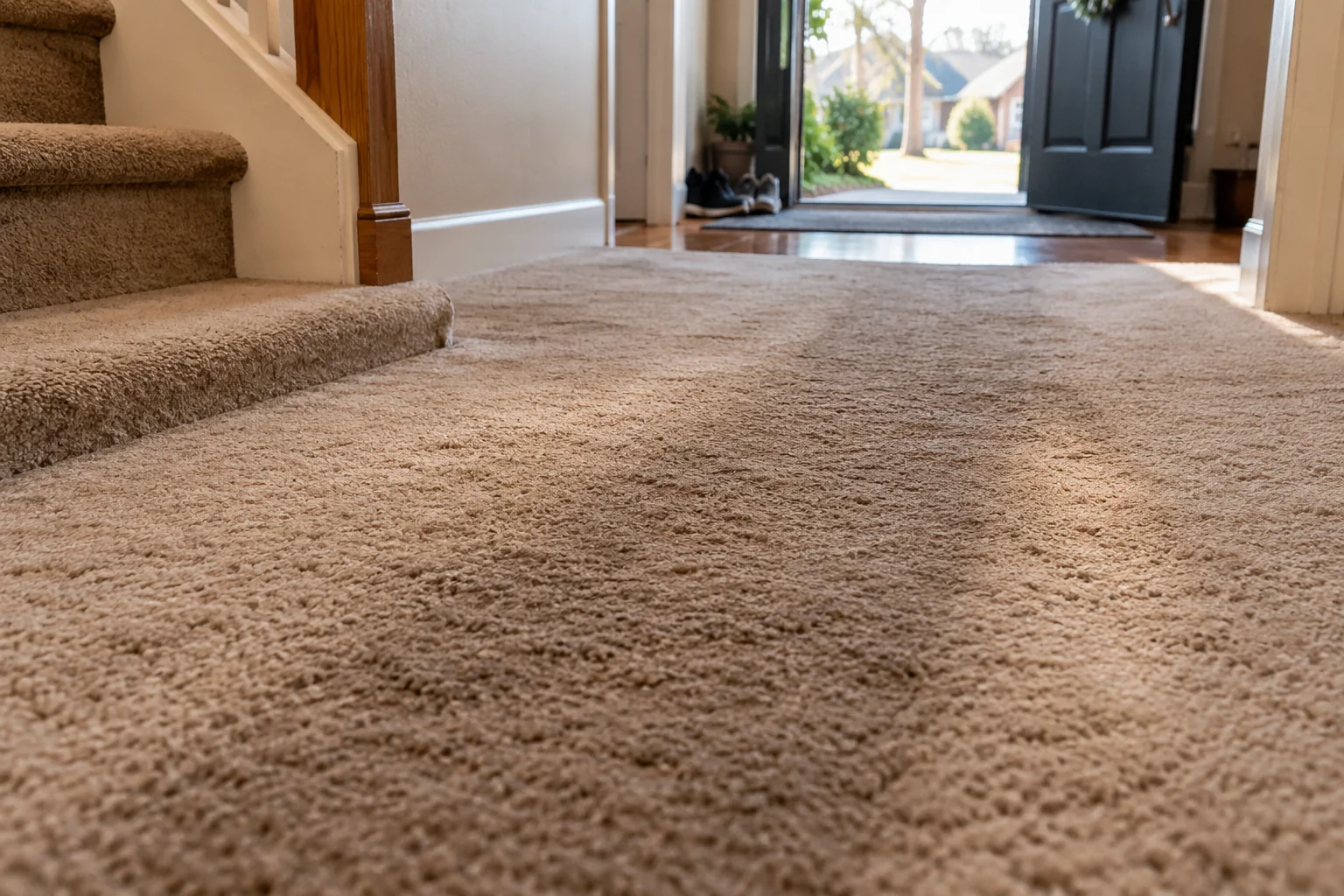
Watch high-traffic routes rather than waiting for the whole room to look dirty. Homes with pets or frequent tracked-in dirt may need earlier attention, while lightly used rooms may not.
Let the carpet's construction set the boundary
Before hiring a machine or booking a service, identify the carpet fiber and look for its care instructions. A woven wool rug, a synthetic wall-to-wall carpet, and a carpet with a particular backing may require different products and moisture limits. Check the manufacturer or installer paperwork, including warranty conditions. If there is no label, ask a reputable cleaner to identify the material and propose a small test. Guessing at a chemical or heat setting can cause shrinking, color movement, or backing damage that no later cleaning can reverse.
Look at the traffic pattern. A hallway, entry, or pet resting area usually accumulates soil faster than an unused guest room. Move a piece of furniture and compare its protected carpet with the exposed area. Heavy gray edges may reflect trapped dust and airflow rather than a single spill. Note stains separately from general dullness. The method that removes routine soil may not remove dye, bleach marks, or wear. Cleaning should be chosen for what is actually present, not solely because a calendar says it is time.
Build a schedule from observations
Routine vacuuming is the foundation. Follow the carpet and vacuum makers' guidance on brush setting and frequency so grit does not stay embedded. In a busy home, inspect high-traffic areas regularly and address fresh spills promptly using the carpet maker's method. Record the date and result of a professional deep clean. If the same area becomes dull quickly, consider entrance mats, shoe habits, or a recurring source of soil before simply shortening the cleaning interval.
Avoid promising that every carpet needs extraction on one fixed date. The right interval depends on fiber, household use, pets, local dust, and warranty terms. If a service provider recommends an interval, ask what they observed and whether the recommendation is required by the material warranty. A written record of methods and products used helps with future decisions.
Keep routine soil removal consistent
Vacuum with the appropriate setting and attachment, especially near entrances. Use suitable entry mats and remove outdoor dirt before it spreads. Deal with spills promptly using the carpet maker's instructions.
Blot instead of aggressively rubbing. Test any spot product in a discreet area, and avoid leaving detergent residue that can attract more soil.
Keep surface dirt from becoming ground-in soil
Use a suitable vacuum slowly enough to pick up grit, especially at entrances and along baseboards. Empty or replace the vacuum's collection system as its maker directs; an overfilled machine performs poorly. Check that the brush does not snag loops or damage a delicate pile. For area rugs, follow their specific care instructions, including whether the rug should be lifted for floor cleaning. A good routine reduces the load that deep cleaning must remove later.
Treat spills promptly, but do not rub aggressively. Blot with a clean cloth, working from the edge toward the center when appropriate. The carpet manufacturer may specify a product and test procedure. A wet stain remover that is not rinsed or extracted can leave sticky residue and attract new dirt. If a stain is from an unknown chemical, dye, or bodily fluid, ask a qualified cleaner before applying multiple products. Never mix cleaning agents in the carpet.
Recognize wear that cleaning cannot fix
Flattened pile on a staircase, faded color by a window, or damaged fibers from abrasion may remain after soil is removed. Compare the direction and texture of the pile, not just its color. If the carpet looks clean while wet but appears dull again when dry, inspect for residue or permanent wear. A competent cleaner should explain what can realistically improve and test an inconspicuous area when uncertainty is high. Avoid paying for repeated treatments that cannot restore fiber.
A rug with fragile backing, loose seams, or dye that transfers to a damp white cloth may need specialist care. Document its condition before transport or on-site treatment. A small, valuable rug is not automatically a DIY project because it is easy to carry.
Plan for extraction and drying
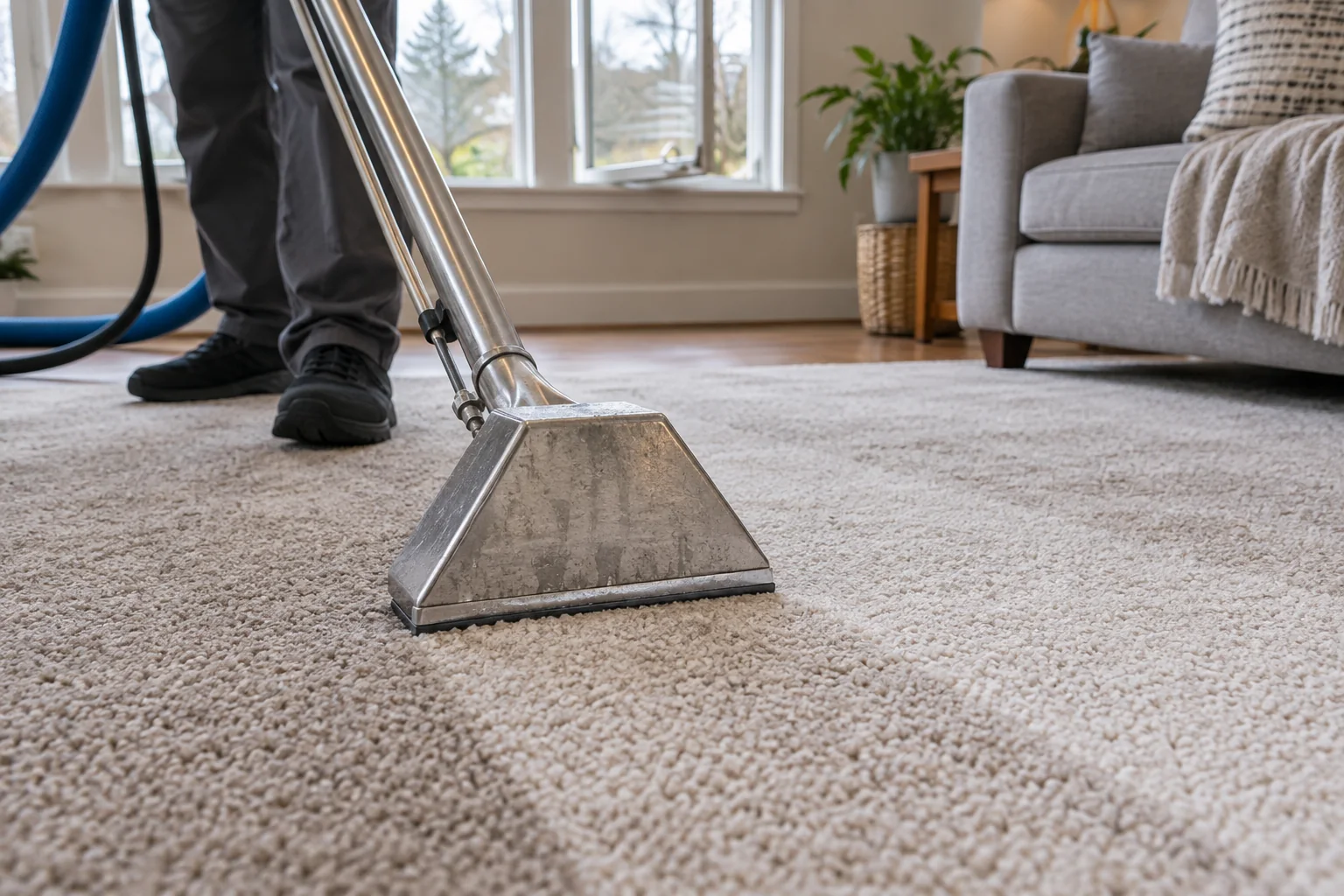
Choose a provider or machine suited to the carpet. Ask how much moisture the process uses and how the room should be ventilated. Move vulnerable furniture or protect it as advised.
Do not repeatedly soak a stubborn spot. Leave the carpet to dry fully before restoring normal traffic and furniture. If it stays damp or develops a musty smell, seek help rather than covering it with a rug.
Plan extraction so the carpet can dry
Deep cleaning adds moisture even when equipment extracts much of it. Follow the carpet and machine instructions for pre-vacuuming, solution strength, passes, and drying conditions. More detergent is not better; residue can remain. Do not saturate one spot to chase a stain. Keep people and pets off the carpet until it is dry enough for use. Arrange airflow and temperature appropriate to the product and room, without placing a heater or electrical device unsafely on a damp surface.
Before work, move small furniture and note anything that may bleed color onto wet carpet. A service provider should explain which items they will move, what stays in place, and how they protect wood, metal, and baseboards. Ask how they test colorfastness and how they handle existing stains. Afterward, inspect for areas that remain unusually wet or have a new odor. Extended dampness can create a bigger problem than the original soil.
Ask useful questions of a cleaner
Request the proposed method for your carpet fiber, whether spot treatments are included, expected drying conditions, and what the price covers. Ask about limitations for permanent stains and worn areas. A claim that every stain can be removed is a warning sign. Clarify how they will handle stairs, edges, and under furniture. Keep a copy of the invoice and product information where available. If the carpet has a warranty, confirm that the method and documentation satisfy it.
A professional service is particularly sensible when the material is delicate, the area is large, or previous DIY cleaning left residue. The goal is not to rent the most powerful machine but to remove soil while preserving fiber and backing.
Recognize problems cleaning will not solve
Recurring stains may come from the backing or subfloor. Water damage, damaged underlay, and persistent odor may need an inspection. Deep cleaning is not a substitute for addressing a leak or contaminated flooding.
Separate ordinary soil from contamination
A musty smell, recurring damp patch, or carpet affected by sewage or contaminated floodwater is not an ordinary deep-cleaning job. Stop and seek specialist guidance. Porous carpet and padding can hold contamination where a surface cleaner cannot reach. If a water leak is ongoing, repair and dry the source before deciding whether carpet can be saved. Do not hide an odor with fragrance or shampoo while the backing remains wet.
Pet accidents may need a method that addresses both carpet and underlay. A stain on the surface can be smaller than the affected area beneath. Ask the cleaner how they will assess it and what results are realistic. If a stain reappears after drying, residue can wick upward from below; repeated surface spraying may not solve it.
Verify after complete drying
Inspect the carpet once it is dry, under normal light. Does it feel clean rather than sticky? Is there a new ring, color change, or lingering smell? Check seams and edges for lifting. Compare the high-traffic area with the protected area you observed before cleaning. Document any concern promptly and contact the service provider while the work is recent. A meaningful result is cleaner fibers without persistent dampness or damage.
For ongoing care, place mats at entries, address spills early, and maintain a vacuum routine. Reassess the deep-cleaning interval based on how the carpet actually performs. A schedule should serve the material and household, not become a substitute for ordinary upkeep or a response to contamination it cannot safely handle.
At the next cleaning, ask the provider to identify one test area and explain the expected change before treating the whole room. This is especially valuable for old traffic lanes or spots that have been cleaned repeatedly. A test can reveal whether the dullness is removable soil, residual detergent, or permanent fiber wear. Photograph the dry test area in the same light as the untreated carpet. If the improvement is small, you can discuss whether a full service is worth the cost or whether another solution, such as a rug or eventual replacement, is more honest. A clear expectation protects the carpet and the household budget.
Turn one inspection into a useful routine
A maintenance schedule improves when it records observations, not just dates. Keep a brief note of what you inspected, what you saw, and whether action was needed. Over several cycles, this tells you whether the interval is sensible for your property. A change in season, occupancy, weather exposure, or equipment use can make an old routine too frequent or too slow. Review the schedule when those conditions change instead of treating a printed interval as a guarantee.
Take photos from the same safe position when possible. They make subtle changes easier to recognize and are useful when you ask a contractor for advice. Do not use a photo as a substitute for an inspection where the problem can be hidden. If moisture, noise, or other warning signs appear between scheduled checks, respond then. A calendar is a reminder to look, not permission to ignore an active fault until the next date.
Know what successful maintenance looks like
After a cleaning, replacement, or service visit, check the function that originally mattered. Does water move away, air flow as expected, or the equipment complete a normal cycle? Ask the service provider what they found and whether they recommend any change to the next inspection date. Keep product specifications and invoices so future work starts with accurate information.
If a maintenance task repeatedly produces the same abnormal finding, look for an underlying cause. Replacing a component sooner every cycle may be a symptom-management strategy rather than a solution. At that point, a qualified assessment can be more useful than increasing the frequency again. A good routine leaves the home working reliably and gives you clear signals for when to seek help.
Quick recap
- Build the schedule from the care instructions.
- Keep routine soil removal consistent.
- Plan for extraction and drying.
- Recognize problems cleaning will not solve.
Frequently asked questions
Is a rented cleaner always suitable?
No. Confirm that its method and solution are approved for the carpet and that you can dry the room adequately.
Should I clean only when stains appear?
Visible stains are only one signal. Use the manufacturer's schedule and the room's use as well.